Space Exploration

Einstein’s Curved Universe

Posted on:

Newton's Laws vs. Einstein's Relativity Newton's law of universal gravitation explained that two objects attract each other with a force proportional to their masses and inversely proportional to the square of the distance between them. This provided a useful model for understanding celestial bodies' movements. Einstein's theory of general relativity […]

Loading

Space Exploration

Galactic Theoretical Physics

Posted on:

Einstein's Cosmological Constant Einstein introduced the cosmological constant in 1917 to maintain a static universe in his equations. It acted as a counterforce to gravity, preventing universal collapse. However, when the expanding universe was discovered, Einstein considered it a mistake. Interestingly, the concept has found new relevance in modern cosmology. […]

Loading

Space Exploration

Einstein’s Galaxy Gravity Insights

Posted on:

General Relativity and Its Predictive Power Einstein's theory of general relativity fundamentally changed our understanding of gravity and spacetime. Published in 1915, it explains how massive objects warp the fabric of spacetime. The theory successfully predicted phenomena like black holes and gravitational waves, which were later observed and validated. Black […]

Loading

Space Exploration

Galaxies Bending Light

Posted on:

The Basics of Gravitational Lensing Gravitational lensing is a cosmic phenomenon where massive celestial bodies bend light from distant objects. This effect, predicted by Einstein's theory of general relativity in 1915, occurs when spacetime curves around massive objects like galaxies or galaxy clusters. As light from distant stars or galaxies […]

Loading

Space Exploration

Space-Time Distortion in Astrophysics

Posted on:

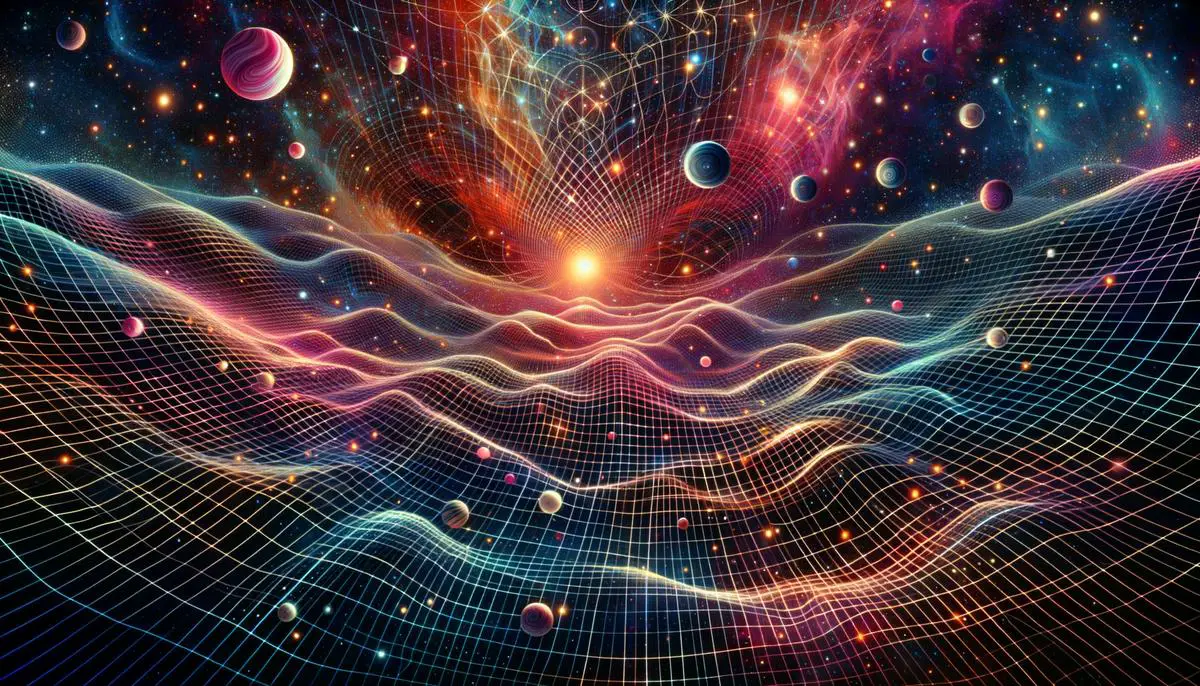
General Relativity and Space-Time Albert Einstein's theory of general relativity, introduced over a century ago, suggests that gravity is not merely a force but a curvature in space-time. Picture a bowling ball placed on a trampoline — that's a massive object creating a warp in the fabric of space-time itself. […]

Loading

Space Exploration

Understanding Space-Time Bending

Posted on:

The Nature of Space-Time Space-time can be visualized as a cosmic fabric. Massive objects like planets or stars create depressions in this fabric, much like a heavy ball on a trampoline. This fundamental concept shapes how celestial bodies move through the universe. We exist in four dimensions: three of space […]

Loading

Space Exploration

Black Holes and Space-Time

Posted on:

General Relativity and Space-Time Distortion Albert Einstein's theory of general relativity fundamentally changes our understanding of the cosmos. It proposes that massive objects warp the fabric of space-time, similar to how a bowling ball would create a dip on a stretched trampoline. This concept explains gravity not as a force, […]

Loading

Space Exploration

‘Oumuamua vs. Celestial Objects

Posted on:

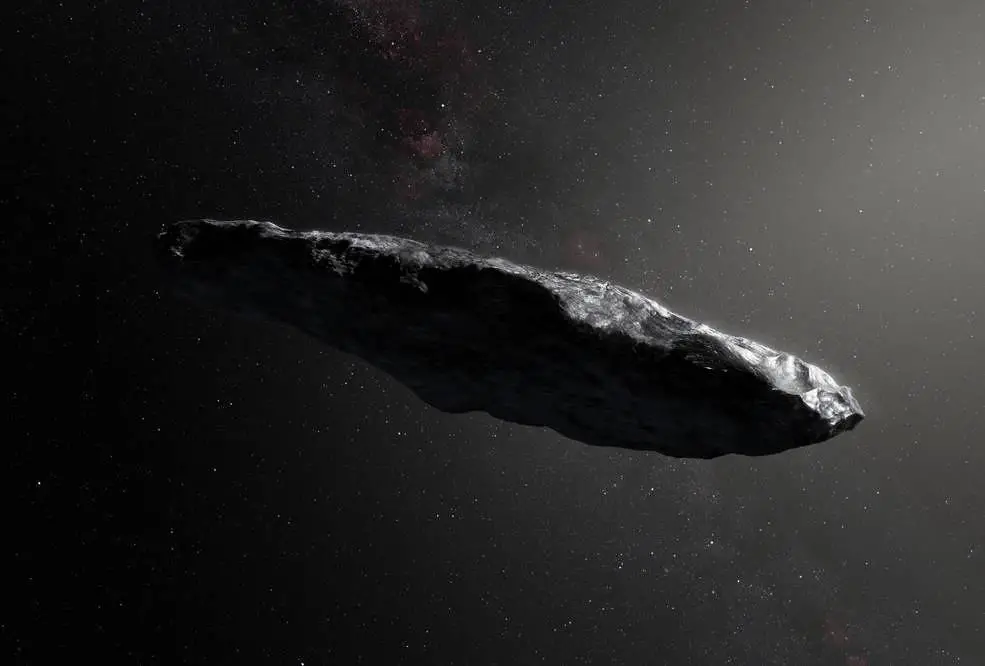
'Oumuamua's Unique Characteristics 'Oumuamua, with its elongated frame resembling a cigar or a slightly lopsided pancake, defies standard cosmic categories. Its length-to-width ratio of about 6:1 contrasts sharply with the more potato-shaped asteroids typical in our solar system. While asteroids are rocky or metallic and follow predictable paths around the […]

Loading

Space Exploration

Oumuamua Theories

Posted on:

In the vast expanse of our universe, celestial visitors occasionally grace our solar system, sparking curiosity and debate. Such was the case with 'Oumuamua, an object that defied conventional understanding and left scientists pondering its origins and behavior. Discovery and Characteristics of Oumuamua On October 19, 2017, 'Oumuamua was discovered […]

Loading

Space Exploration

Space-Time Interactions

Posted on:

Einstein's Theory of Relativity Einstein's theory of relativity intertwines space and time into a unified fabric of space-time. This cosmic structure bends and flexes with mass and energy, creating gravitational effects. The speed of light, a constant 186,282 miles per second, serves as a universal yardstick. Time dilation, a key […]

Loading