Newton's Laws vs. Einstein's Relativity
Newton's law of universal gravitation explained that two objects attract each other with a force proportional to their masses and inversely proportional to the square of the distance between them. This provided a useful model for understanding celestial bodies' movements.
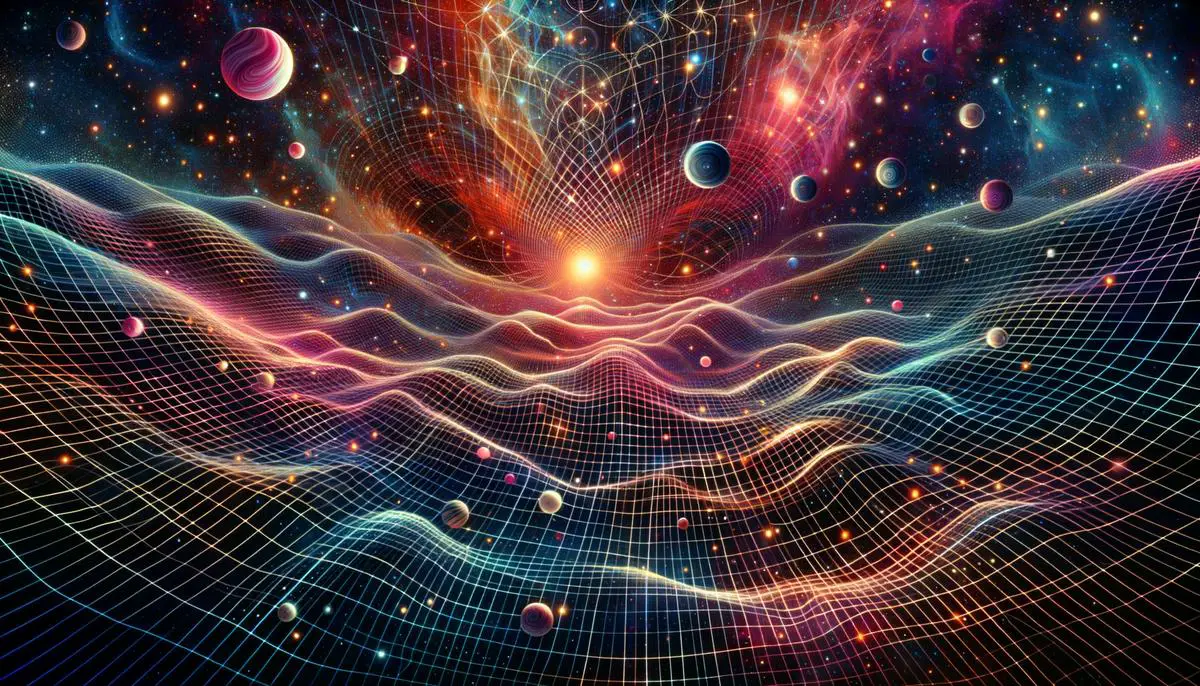
Einstein's theory of general relativity transformed our understanding. It depicted gravity not as a force but as a bending of space-time itself. Massive objects like planets warp the fabric of space-time, similar to how a heavy ball would bend a quilt.
Einstein's theory explained phenomena that Newton's laws couldn't fully account for, such as Mercury's peculiar orbital motion. It also predicted gravitational waves, ripples in space-time that were first detected in 2016.
While Newton's laws remain useful for many practical applications, Einstein's relativity excels in areas unexplored by classical physics, such as studying black holes or the early universe.
The Fabric of Space-Time
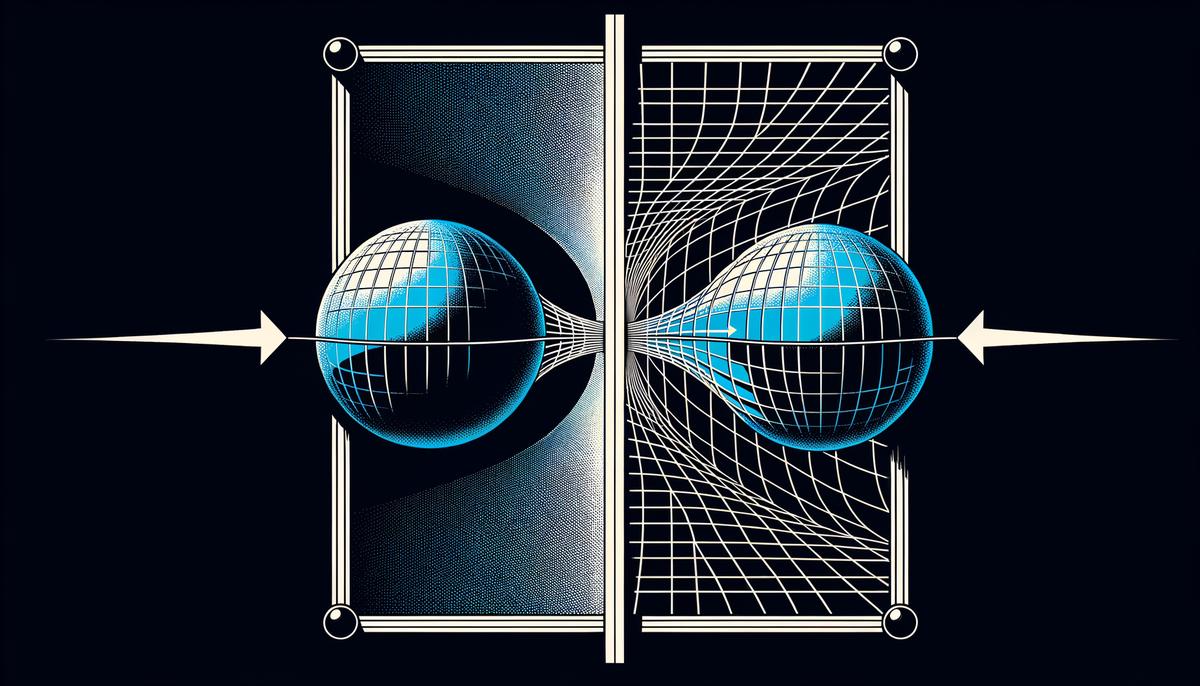
Space-time weaves together the three dimensions of space with time into a unified, four-dimensional structure. Massive objects act as sculptors of this cosmic fabric, bending space-time like a weighty object sinks into a flexible surface. This warping is gravity—not a force pulling you down, but a consequence of geometrical curves guiding everything from apples to planets.
In this distorted terrain, what seems like a curved path for light near a star is actually the light following a "straight" course through curved space-time. On cosmic scales, this curvature shapes galactic orbits and directs the paths of light across vast distances.
As mass alters space, time too bends to the weight of reality. Clocks tick at different rates depending on their position in a gravitational field or their speed of motion. This effect, while negligible in everyday life, becomes significant for GPS satellites and near-light-speed travel.
Einstein's vision of the universe as an intricately curved expanse of space-time elevates classical physics into a multi-dimensional framework. Within this elegantly warped expanse, reality unfolds, perpetually sculpted by mass and guiding both matter and time along the curves of its cosmic structure.

Gravitational Waves
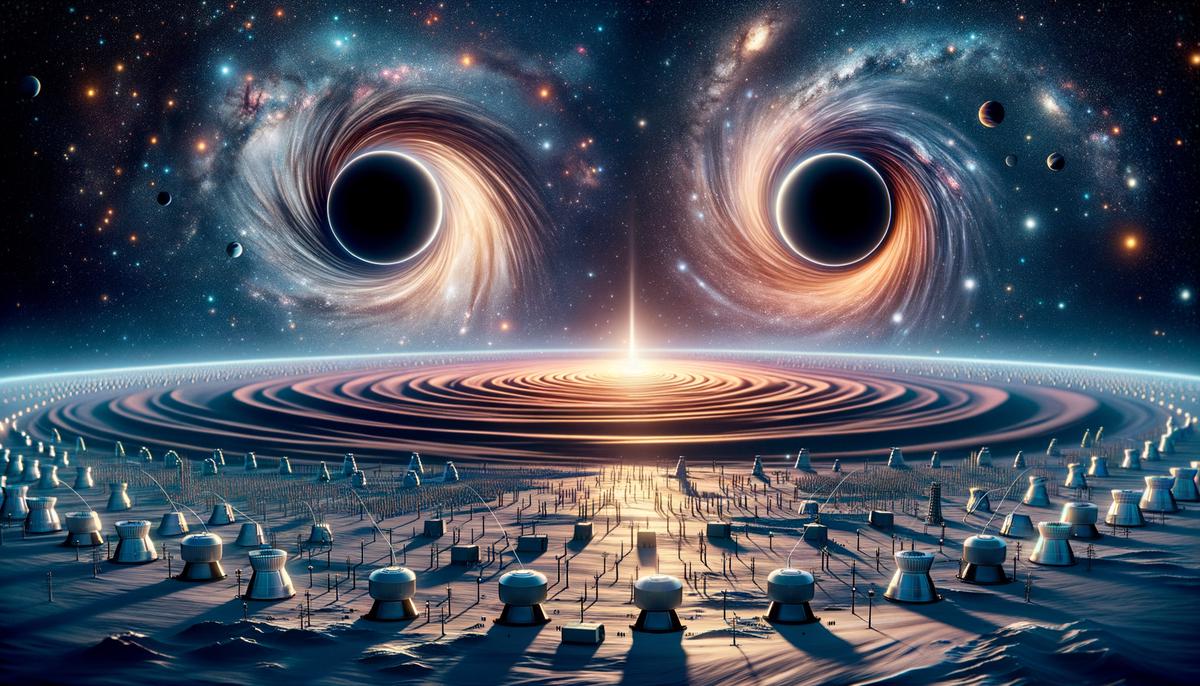
Gravitational waves are ripples in the fabric of space-time, predicted by Einstein's general theory of relativity. They emerge when massive objects like merging black holes or neutron stars collide, sending disturbances through space-time that traverse the cosmos.
In 2015, the Laser Interferometer Gravitational-Wave Observatory (LIGO) achieved the first direct detection of these waves. This breakthrough opened a new era in astronomy, allowing us to examine the mechanics of exotic astronomical events previously inaccessible.
"Gravitational wave astronomy gives astronomers a new 'sense' with which to explore the universe, and so there will almost certainly be surprises ahead."
Gravitational waves offer insights into the universe's ancient past and its evolution. They allow us to study phenomena like black hole mergers and neutron star collisions, challenging scientists to refine existing models and develop new theories.
As LIGO and its successors continue to improve their sensitivity, the potential for new discoveries grows. From testing the limits of general relativity to uncovering novel cosmic phenomena, gravitational wave research promises to expand our understanding of the universe.
Experimental Evidence for General Relativity
The experimental verification of general relativity has produced compelling evidence across various cosmic phenomena:
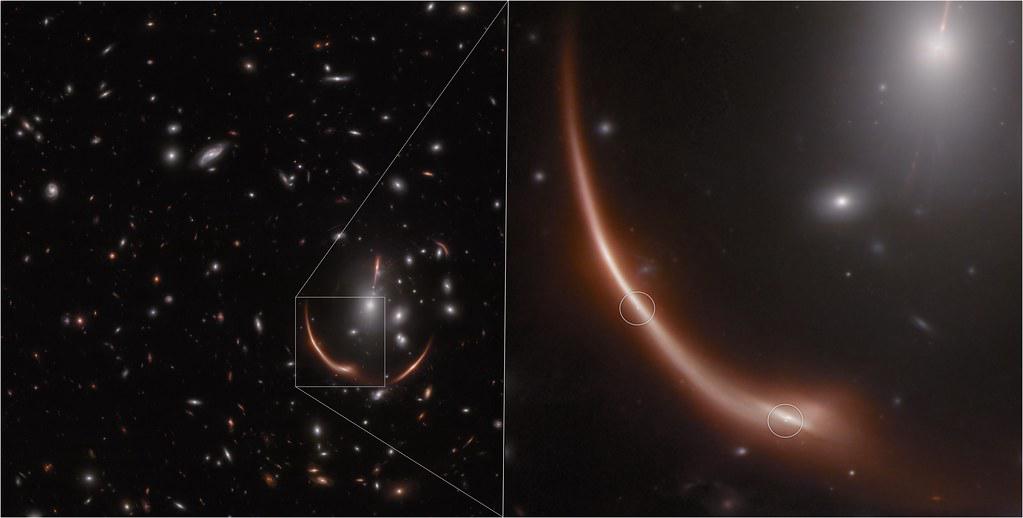
- Gravitational lensing: First observed during a solar eclipse in 1919, this effect demonstrates how space-time's curvature bends light around massive objects. Today, it's a vital tool for studying distant celestial phenomena and mapping galaxies.
- Mercury's orbital precession: Einstein's theory accurately described the observed extra precession of Mercury's perihelion, which Newton's laws couldn't fully explain.
- Frame-dragging: Also known as the Lense-Thirring effect, this involves the twisting of space-time around rotating bodies. NASA's Gravity Probe B confirmed this effect around Earth using ultra-precise gyroscopes.
- Gravitational redshift: The stretching of light's wavelength in a gravitational field has been consistently affirmed through various experiments, from the Pound-Rebka experiment of the 1960s to modern observations.
These observations and experiments consistently support Einstein's theory, revealing the profound interplay between matter, space, and time that general relativity describes.
Challenges and Future Directions
Despite its successes, general relativity faces challenges in reconciling with quantum mechanics, particularly in extreme conditions like black hole interiors or the early universe. The pursuit of a unified theory that combines these two fundamental frameworks remains a central goal in physics.
Theoretical approaches like string theory and loop quantum gravity attempt to bridge this gap, proposing novel concepts about the nature of space, time, and matter at the smallest scales.
Additionally, the mysteries of dark matter and dark energy, which constitute about 95% of the universe's content, present ongoing challenges. These phenomena, while supported by observational evidence, remain poorly understood and elude direct detection.
Future projects, such as the James Webb Space Telescope and advanced particle accelerators, aim to shed light on these enigmas. As we push the boundaries of observation and theory, each discovery brings us closer to a deeper understanding of the cosmos.
The quest to unify our understanding of the universe at all scales and to unravel the nature of dark matter and energy reflects the ongoing journey of scientific inquiry. It challenges us to think creatively, collaborate across disciplines, and remain open to revolutionary ideas that may reshape our cosmic perspective.

Einstein's reimagining of gravity as the curvature of space-time continues to shape our understanding of the universe. As we explore cosmic mysteries and refine our theories, we are reminded of science's enduring pursuit of universal truths.
- Einstein A. Relativity: The Special and the General Theory – 100th Anniversary Edition. Princeton University Press; 2015.
- Hawking S, Penrose R. The Nature of Space and Time. Princeton University Press; 2010.
- DK. The Physics Book: Big Ideas Simply Explained. DK; 2020.
- Einstein A. Autobiographical Notes. Open Court; 1999.

You need to take part in a contest for one of the best sites on the net.
I will highly recommend this blog!