Space Exploration

Visualizing the Fourth Dimension

Posted on:

Understanding the Fourth Dimension Imagine shapes that extend beyond our familiar three dimensions. In our 3D world, we move along x, y, and z axes—left to right, forward and back, and up and down. Adding a fourth axis, often labeled 'w', opens up new possibilities. A hypercube is a 3D […]

Loading

Space Exploration

Experimental Evidence of Spacetime

Posted on:

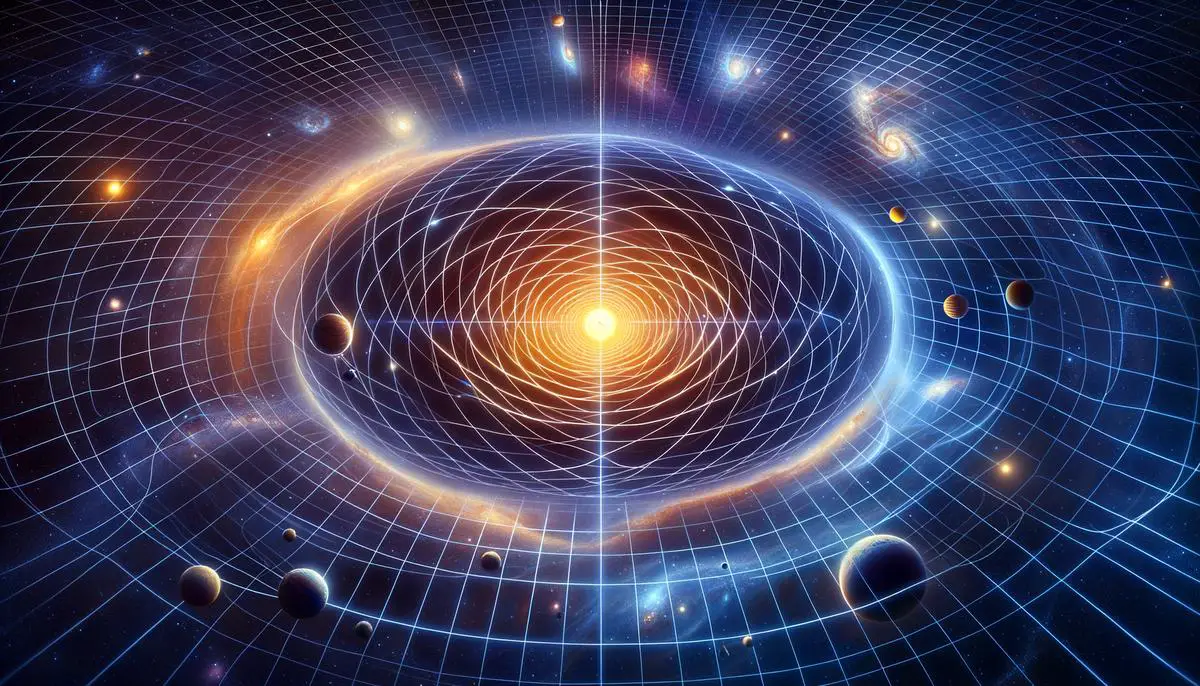
General Relativity and Its Predictions Albert Einstein's general theory of relativity transformed our understanding of gravity. It replaced Newton's concept of invisible strings with the idea of curved space-time. Imagine space as a trampoline with a bowling ball (representing the Sun) creating a dent. Smaller objects, like planets, follow this […]

Loading

Space Exploration

K2-18b Exoplanet Missions

Posted on:

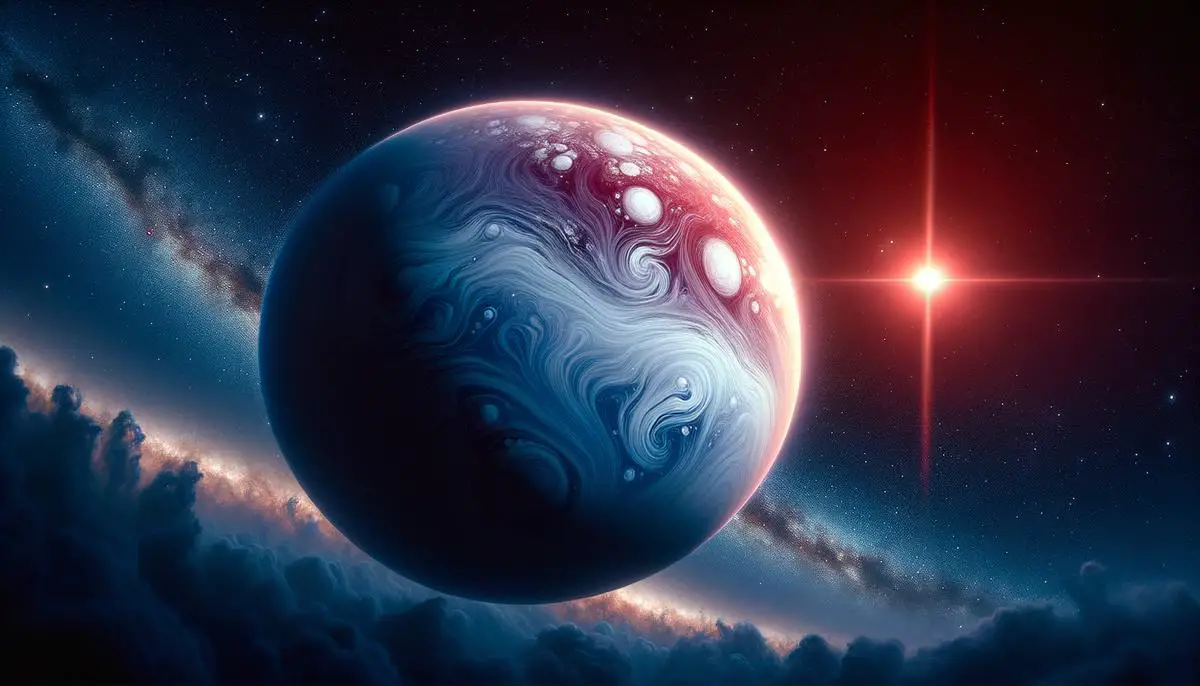
Detection of DMS on K2-18b NASA's James Webb Space Telescope has potentially detected dimethyl sulfide (DMS) in the atmosphere of K2-18b. This molecule, often produced by marine algae on Earth, hints at possible life beyond our solar system. However, the scientific community remains cautious. Detecting molecules in space relies on […]

Loading

Space Exploration

Big Bang Theory Explained

Posted on:

Origins of the Universe The universe began about 13.7 billion years ago, compressed into an incredibly tiny point. Cosmic inflation, occurring in less than 10-32 of a second, rapidly expanded the universe faster than light speed. After this initial expansion, the universe settled to form particles that would eventually become […]

Loading

Space Exploration

Understanding the Hubble Constant

Posted on:

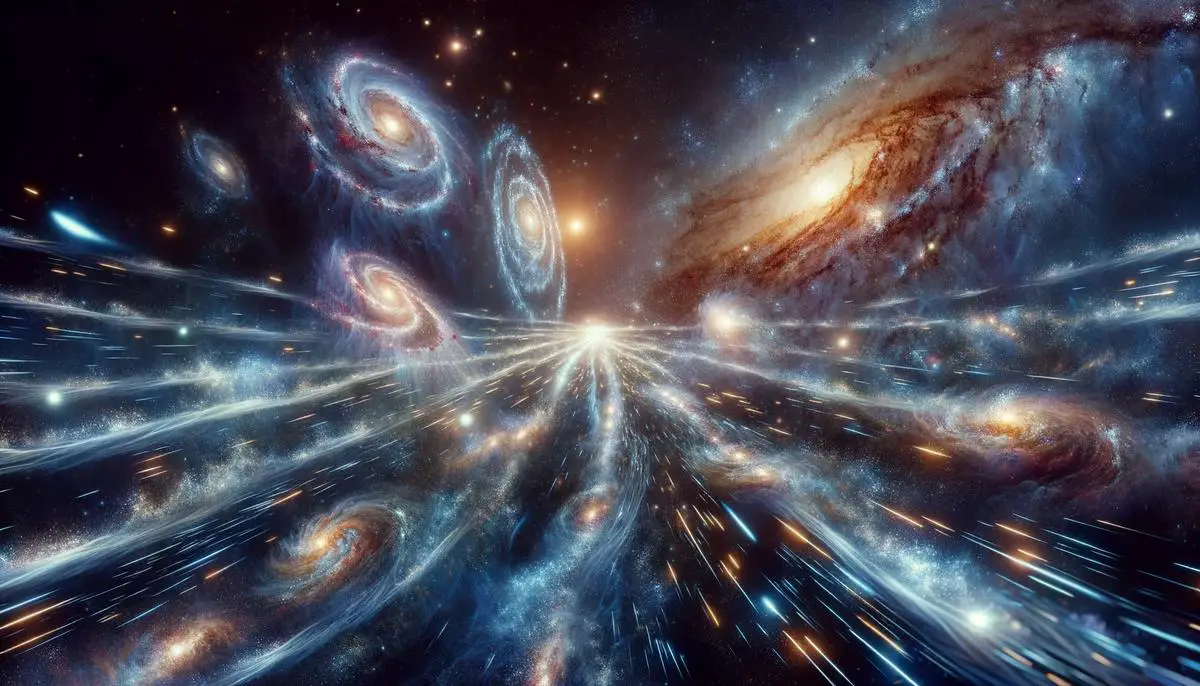
The story of the Hubble Constant reflects humanity's pursuit of understanding the universe's expansion, marked by significant milestones and ongoing debates. Historical Development of the Hubble Constant Edwin Hubble's observation that galaxies are moving away from us revolutionized our cosmic perspective. Before Hubble, Vesto Slipher noted that spiral nebulae were […]

Loading

Space Exploration

K2-18b: Potential Life Signs

Posted on:

Exciting Discovery on K2-18b: Potential Signs of Life? The astronomical community is buzzing with excitement over recent observations of exoplanet K2-18b. Located approximately 120 light-years away in the Leo constellation, this intriguing world has captured attention due to findings from the James Webb Space Telescope (JWST). Scientists have detected potential […]

Loading

Space Exploration

K2-18b Atmosphere Analysis

Posted on:

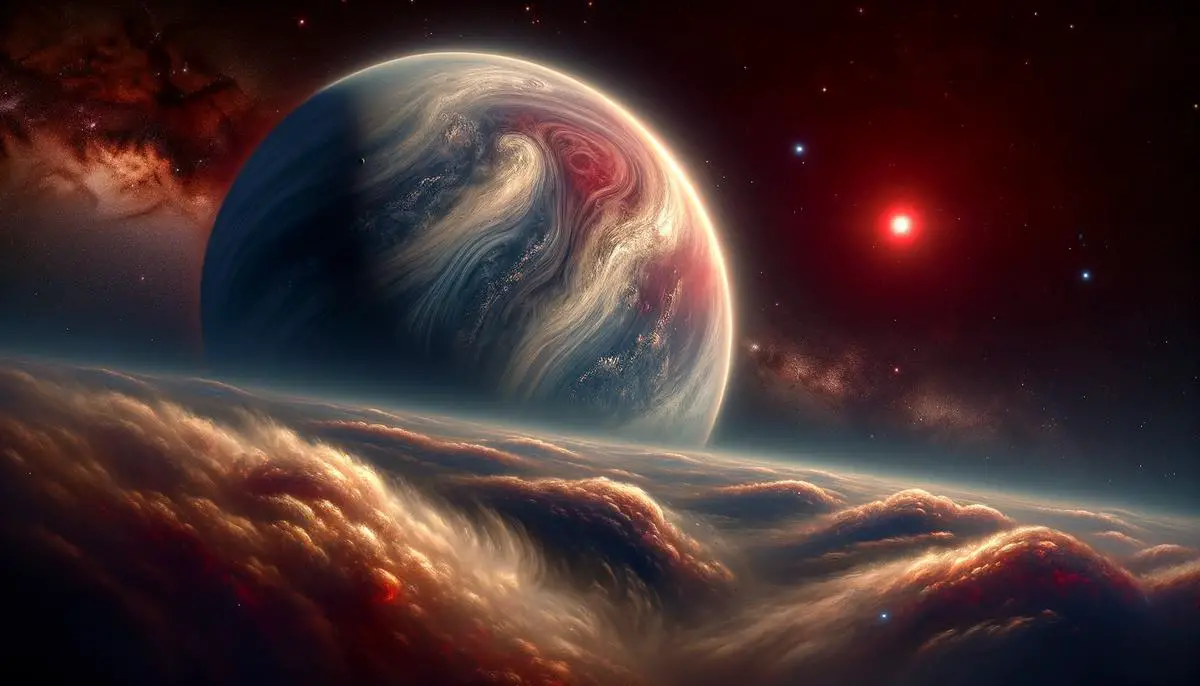
Atmospheric Composition of K2-18b The atmosphere of K2-18b presents an intriguing puzzle. Methane and carbon dioxide have been detected, suggesting a hydrogen-rich atmosphere possibly enveloping an ocean. Hints of dimethyl sulfide, a molecule often associated with marine life on Earth, have raised interesting questions about potential biosignatures. K2-18b orbits a […]

Loading

Space Exploration

Understanding Light-Years

Posted on:

Definition and Calculation of a Light-Year A light-year measures the distance light travels in one year, approximately 9.46 trillion kilometers. Light moves at 299,792 kilometers per second, covering this vast distance in about 31.54 million seconds (one year). Light-years are used instead of kilometers or miles due to the immense […]

Loading

Space Exploration

K2-18b Observational Discoveries

Posted on:

Detection of Dimethyl Sulfide (DMS) The James Webb Space Telescope (JWST) has revealed intriguing observations suggesting the presence of dimethyl sulfide (DMS) in the atmosphere of exoplanet K2-18b. Using the telescope's Mid-Infrared Instrument (MIRI), scientists have detected this molecule, often linked with biological activity on Earth, presenting an exciting yet […]

Loading

Space Exploration

Dark Energy and Universe Expansion

Posted on:

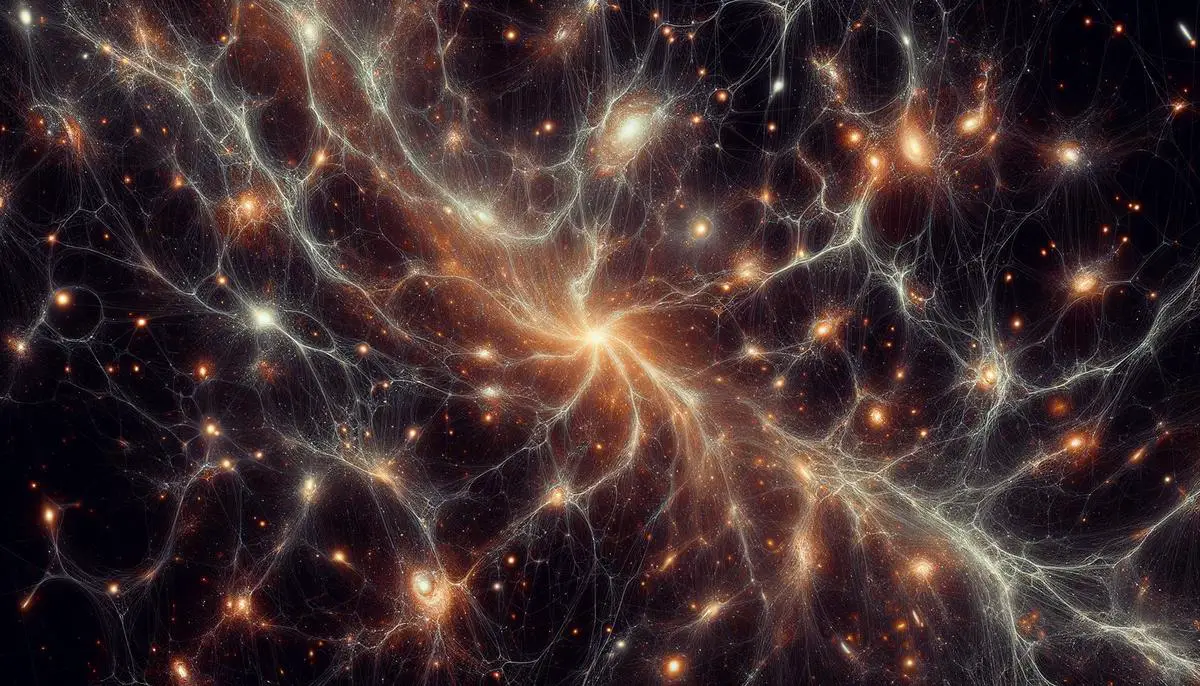
The Nature of Dark Energy Dark energy, the enigmatic force driving the universe's accelerated expansion, remains one of the greatest mysteries in cosmology. Accounting for approximately 70% of the universe's content, it eludes direct observation and is inferred solely from the universe's behavior. The Lambda Cold Dark Matter (LCDM) model, […]

Loading