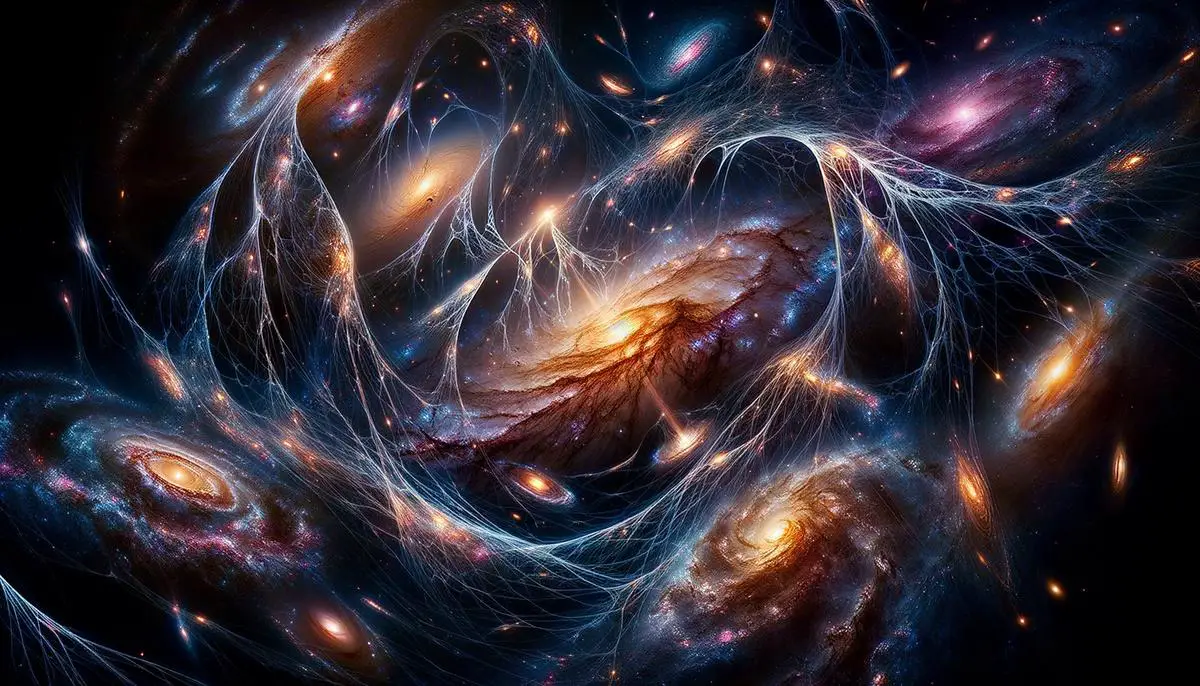
The Basics of Gravitational Lensing
Gravitational lensing is a cosmic phenomenon where massive celestial bodies bend light from distant objects. This effect, predicted by Einstein's theory of general relativity in 1915, occurs when spacetime curves around massive objects like galaxies or galaxy clusters. As light from distant stars or galaxies passes by these massive bodies, it follows the curved spacetime, altering its path.
This bending of light can create multiple images of a single celestial object, each slightly distorted. Astronomers use these distortions to:
- Locate distant objects
- Study the distribution of matter, including dark matter, in the universe
The James Webb Space Telescope and Hubble utilize gravitational lensing to observe early galaxies formed after the Big Bang and to see farther into space with greater clarity.
Gravitational lensing manifests in three main forms:
- Strong lensing: Creates distinct, multiple images of the same object, sometimes forming shapes like Einstein rings.
- Weak lensing: Subtly distorts galaxy images, requiring statistical analysis to detect.
- Microlensing: Occurs when smaller celestial bodies briefly brighten more distant stars, potentially revealing hidden planets or star remnants.
This phenomenon serves as a powerful tool for astronomers, offering insights into galaxy formation, dark matter distribution, and the early universe. Each warped light path unveils new aspects of cosmic interactions and unseen forces, driving our understanding of the universe forward.
Types and Effects of Gravitational Lensing
Strong gravitational lensing occurs when a massive object, like a galaxy cluster, sits between a distant light source and Earth. This can create multiple images of the same distant object, sometimes forming arcs or complete rings called Einstein rings. These phenomena allow astronomers to observe otherwise invisible galaxies and study the mass distribution of lensing objects, including dark matter.
Weak lensing subtly distorts the shapes of background galaxies. While not as dramatic as strong lensing, it requires analysis of large galaxy samples to detect statistical patterns in these distortions. This technique helps map the large-scale structure of the universe and the distribution of dark matter.
Microlensing involves smaller mass objects within our galaxy temporarily brightening distant stars. This effect can reveal the presence of planets or star remnants that are otherwise undetectable. By studying the duration and intensity of microlensing events, researchers can uncover hidden celestial bodies.
Each type of gravitational lensing provides unique insights into the universe's structure, from large-scale dark matter distributions to the presence of individual planets. These natural cosmic lenses extend our observational capabilities, bringing distant and hidden objects into view.
Gravitational Lensing in Astronomy
Gravitational lensing serves as a crucial tool in modern astronomy, enhancing our ability to study distant galaxies and cosmic structures. Telescopes like Hubble and the James Webb Space Telescope (JWST) utilize this phenomenon to observe galaxies from the early universe, providing insights into galactic evolution and the cosmic web.
The JWST, in particular, leverages gravitational lensing to peer further back in cosmic history than ever before. By analyzing light distorted by massive galaxy clusters, it constructs clearer images of primordial galaxies, offering glimpses into the universe shortly after the Big Bang.
Beyond observing distant objects, gravitational lensing aids in:
- Cosmic distance measurement
- Estimating mass and location of lensing objects
- Refining our understanding of cosmic scales
- Improving our ability to map the universe
Gravitational lensing also provides a unique window into the domain of dark matter. Although dark matter doesn't interact with light directly, its gravitational effects are apparent in how it bends light around galaxy clusters. This allows scientists to map the distribution of dark matter and test cosmological models.
Researchers use gravitational lensing to probe fundamental physics as well. Observing how lensing patterns change over time offers insights into dark energy and its role in the universe's accelerated expansion.
In combination with advanced telescopes, gravitational lensing has become an indispensable tool in astronomy. It extends our observational capabilities, allowing us to study distant galaxies, map dark matter, and test fundamental theories about the nature of the universe.
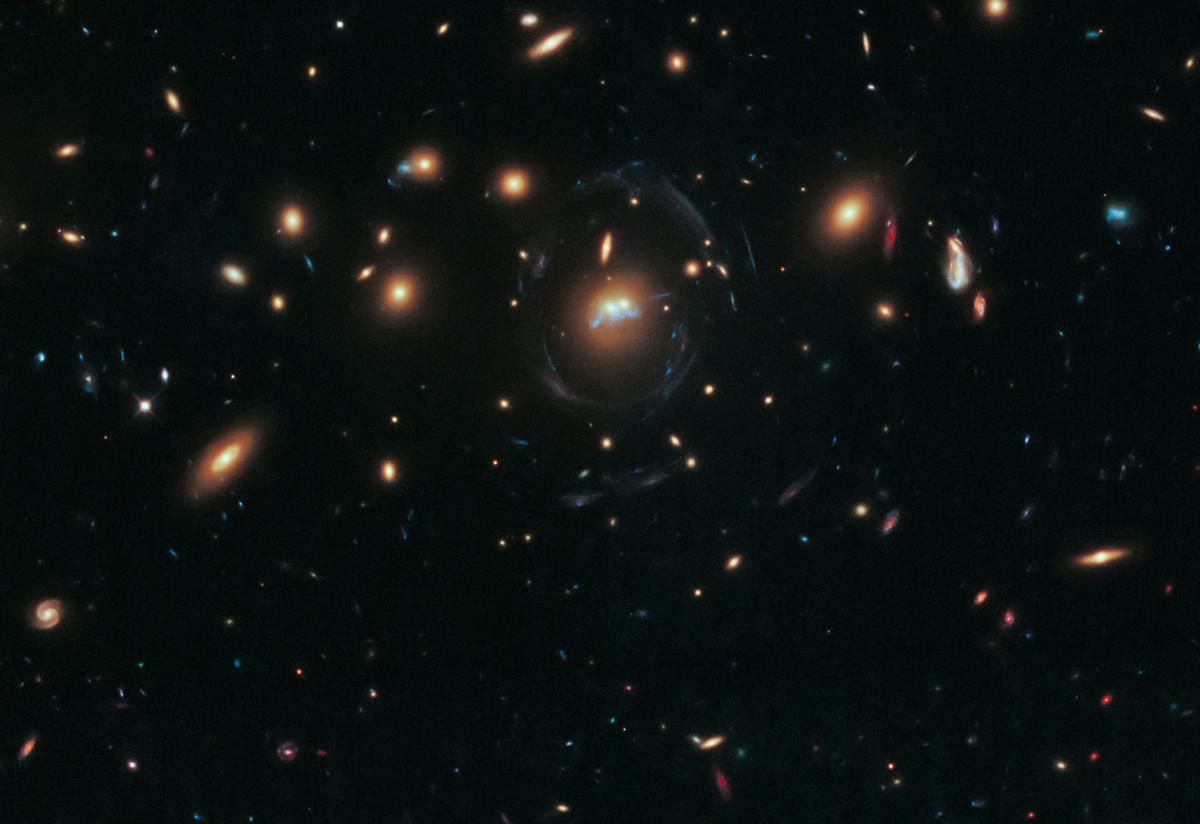
Photo by hubblespacetelescope on Unsplash
Gravitational Lensing and Dark Matter
Gravitational lensing serves as a crucial tool for studying dark matter, which doesn't interact with light but exerts gravitational influence. By observing how light bends around massive objects, astronomers can infer the presence and distribution of this invisible substance.
When light from distant galaxies bends around a cluster, astronomers map these distortions to reveal the lensing object's mass distribution. Since visible matter alone can't account for the observed gravitational effects, these maps often indicate regions where dark matter must reside, providing a silhouette of the invisible cosmic architecture.
Observatories like the James Webb Space Telescope and Hubble use gravitational lensing to:
- Enhance images of distant objects
- Gain insights into dark matter's influence on galactic structures
By compiling numerous observations of lensing events, researchers craft detailed maps of dark matter's distribution across the universe.
These cosmic maps evolve with time and technology, merging with data from other methods to verify theories about universal expansion and galactic behavior. Ambitious projects, like NASA's Nancy Grace Roman Space Telescope, aim to further exploit gravitational lensing to survey galaxies en masse, refining our understanding of dark matter's nature and cosmic role.
Ultimately, gravitational lensing magnifies our comprehension of the unseen forces shaping the universe. It reminds us that even in the vast expanse of space, the universe leaves subtle clues about its hidden components, inviting us to look beyond what we can directly observe.
Historical Experiment and Modern Discoveries
The journey of gravitational lensing from theoretical prediction to confirmed phenomenon began with Einstein's general theory of relativity. The solar eclipse of 1919 provided the first empirical evidence when Sir Arthur Eddington observed stars near the sun's disk appearing slightly shifted due to the sun's gravitational field bending their light. This observation corroborated Einstein's equations and ushered in a new era of theoretical and observational astrophysics.
A century later, modern astronomers continue to harness gravitational lensing's power with advanced space telescopes like Hubble and the James Webb Space Telescope (JWST). These instruments leverage lensing to chart galaxies at the fringes of the known universe and look back in time to shortly after the Big Bang.
Recent discoveries have provided stunning insights:
- The Hubble Space Telescope has captured mesmerizing images of cosmic arcs and complex galaxy clusters teeming with dark matter.
- The JWST enhances these observations with its powerful infrared capabilities, revealing even fainter starlight from the early universe.
Each image uncovers mysteries of formative cosmic eras, enriching our understanding of galactic evolution.
"Ultimately, the question we're trying to address is: What particle or particles constitute dark matter?" – Tansu Daylan, faculty fellow at the McDonnell Center for the Space Sciences at Washington University in St. Louis
From Eddington's initial proof to our current celestial revelations, gravitational lensing exemplifies the synergy of theory and observation. It continues to guide us closer to understanding the complex architecture of our universe, transforming our conception of space and time.
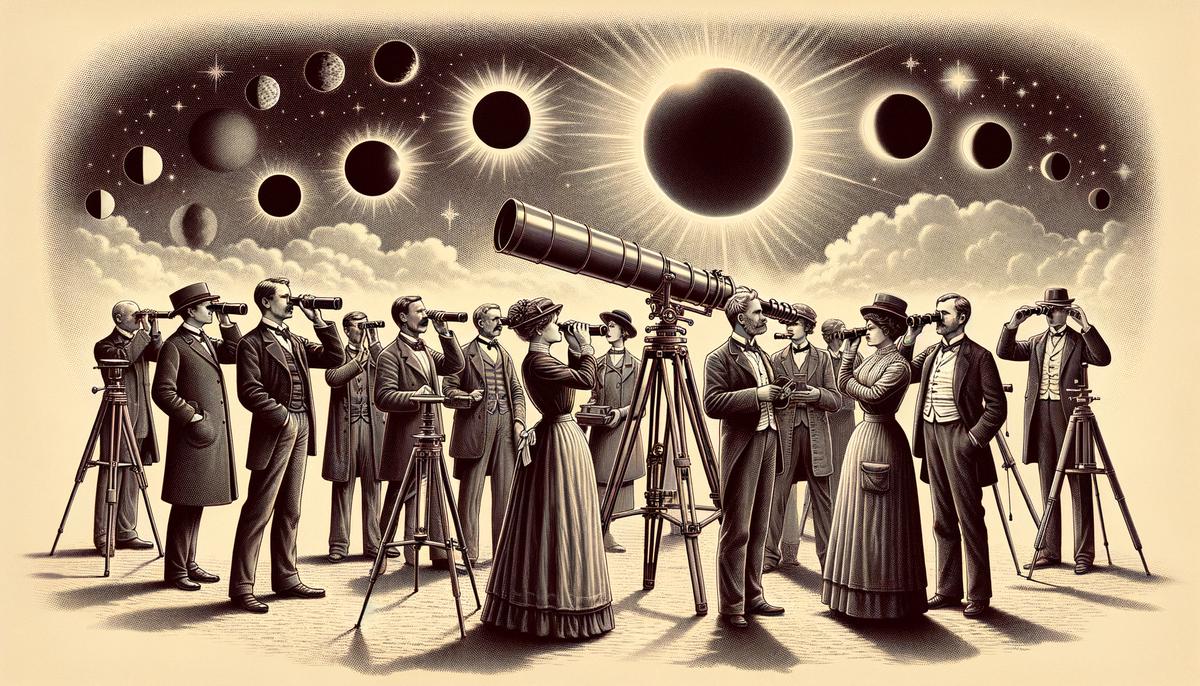
Gravitational lensing, a remarkable phenomenon in astronomy, offers profound insights into the universe's structure and hidden forces. By bending light around massive objects, it reveals distant galaxies and the invisible dark matter shaping them. This cosmic tool transforms our understanding of space-time and invites us to look beyond what is visible, uncovering mysteries that continue to inspire scientific exploration.
- Einstein A. Die Grundlage der allgemeinen Relativitätstheorie. Ann Phys. 1916;49:769-822.
- Eddington AS. The total eclipse of 1919 May 29 and the influence of gravitation on light. Observatory. 1919;42:119-122.
- Wambsganss J. Gravitational lensing in astronomy. Living Rev Relativ. 1998;1:12.
- Daylan T, Wedig B. Gravitational lensing with the Nancy Grace Roman Space Telescope. Astrophys J. 2023;945:37.
