
July 2025 Full Moon: Buck Moon
The July 2025 full moon, known as the Buck Moon, occurs on July 10. This lunar event, named for the time when male deer begin growing new antlers, is also called the 'Thunder Moon' due to frequent early summer thunderstorms. Some European traditions refer to it as the 'Hay Moon,' aligning with harvest activities.
This particular Buck Moon coincides with a Major Lunar Standstill, a phenomenon occurring every 18.6 years when the moon's orbit reaches an extreme tilt relative to Earth's equator. During this event, the moon traces an unusually low arc across the sky, offering a unique perspective for observers.
The Buck Moon also occurs near aphelion, when Earth is farthest from the sun in its orbit. While this doesn't significantly alter the moon's appearance, it adds context to our understanding of Earth's celestial positioning.
Observation Opportunities:
- Examine vast dark seas formed by ancient volcanic activity
- Observe bright ejecta rays from large craters like Tycho
- With advanced telescopes, glimpse Apollo-era landing sites
July 2025 marks the 56th anniversary of the Apollo 11 moon landing, connecting us to this historic achievement.

Lunar Eclipse in July 2025
The July 2025 Buck Moon will not be accompanied by a lunar eclipse. However, 2025 features two total lunar eclipses on March 14 and September 7, often referred to as "Blood Moons" due to the moon's reddish appearance during totality.
Lunar eclipses occur when Earth aligns directly between the sun and the moon, casting its shadow on the lunar surface. There are three types:
- Total: Earth's umbra completely covers the moon.
- Partial: Only a portion of the moon enters the umbra.
- Penumbral: The moon passes through Earth's fainter outer shadow.
While July's Buck Moon won't feature an eclipse, it remains a captivating celestial event, encouraging both reflection and curiosity about our cosmic environment.
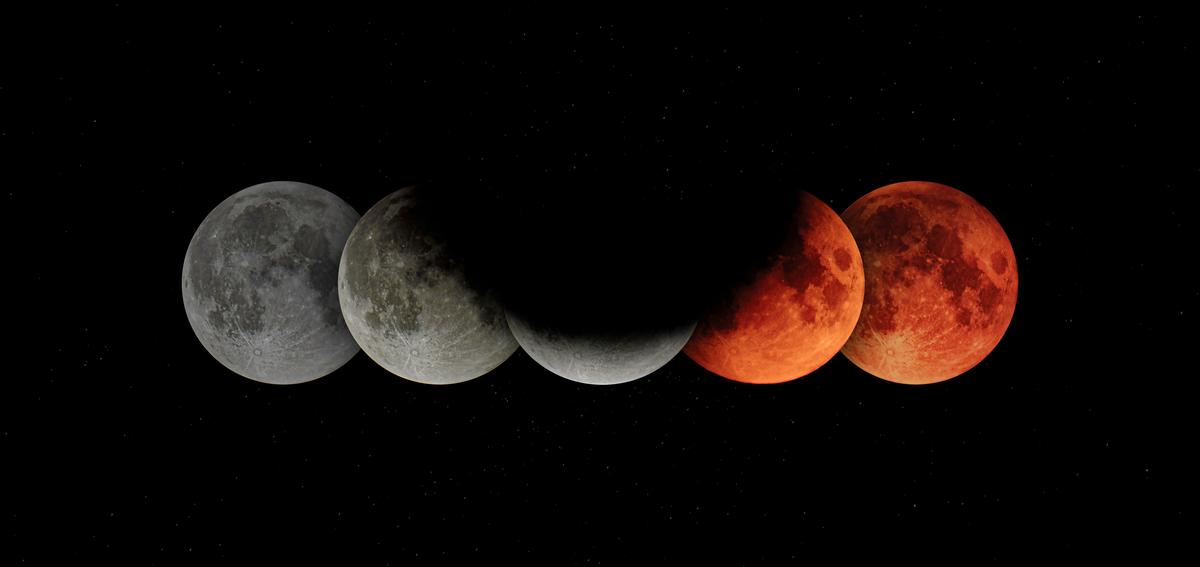
Photo by zoltantasi on Unsplash
Viewing and Significance of July Lunar Events
To optimize your Buck Moon viewing experience on July 10, 2025:
- Check local moonrise times using resources like timeanddate.com or in-the-sky.org.
- Observe as the moon rises over the southeastern horizon during twilight for the most striking views.
- Use binoculars or a small telescope to explore lunar features like craters and maria.
The Buck Moon holds cultural significance across various traditions:
- Native American tribes named it after the growth of deer antlers.
- The 'Thunder Moon' title acknowledges early summer storms.
- European 'Hay Moon' tradition aligns with agricultural activities.
Viewing the Buck Moon can be a shared experience, fostering connection and wonder. Gather with others to observe, discuss, and appreciate this celestial event.
It serves as a reminder of our place in the cosmos and the cyclical nature of our universe.

As the Buck Moon illuminates the night sky, it invites us to reflect on our connection to the cosmos and the natural rhythms that shape our world. This celestial event encourages us to look upward with curiosity and appreciation, bridging the gap between Earth and the vast expanse beyond.
- NASA. SKYCAL Sky Events Calendar. National Aeronautics and Space Administration.
- Espenak F. Lunar Eclipses for Beginners. NASA Eclipse Web Site.
- Royal Museums Greenwich. Lunar Phases and Eclipses. National Maritime Museum.
