
Water Distribution and Retention in Planets
Earth boasts a rich water history, with oceans covering about 70% of its surface. Let's examine Earth's water distribution compared to its planetary neighbors.
Mars once had water-laid surfaces, but now water is mostly locked in polar ice or exists in briny, seasonal flows beneath the surface. Its thin atmosphere allows only brief glimpses of liquid water.
Icy moons like Europa and Enceladus hide vast subsurface oceans under ice shells, possibly deeper than Earth's Pacific. Hydrothermal activity at these depths might create conditions suitable for sustaining life.
Some exoplanets, like super-puffs or rocky giants, could harbor water deep inside rock and metallic cores. GJ 1214 b, for instance, may contain more water than gas, locked away in its planetary interior.
A planet's atmosphere and magnetic field often dictate water's role on or beneath the surface. Earth's protective magnetic field and balanced atmosphere act as a reservoir for life-giving waters. The potential for liquid oceans inside planets suggests a universe more hydrated than previously assumed.
Formation and Source of Water on Earth and Other Planets
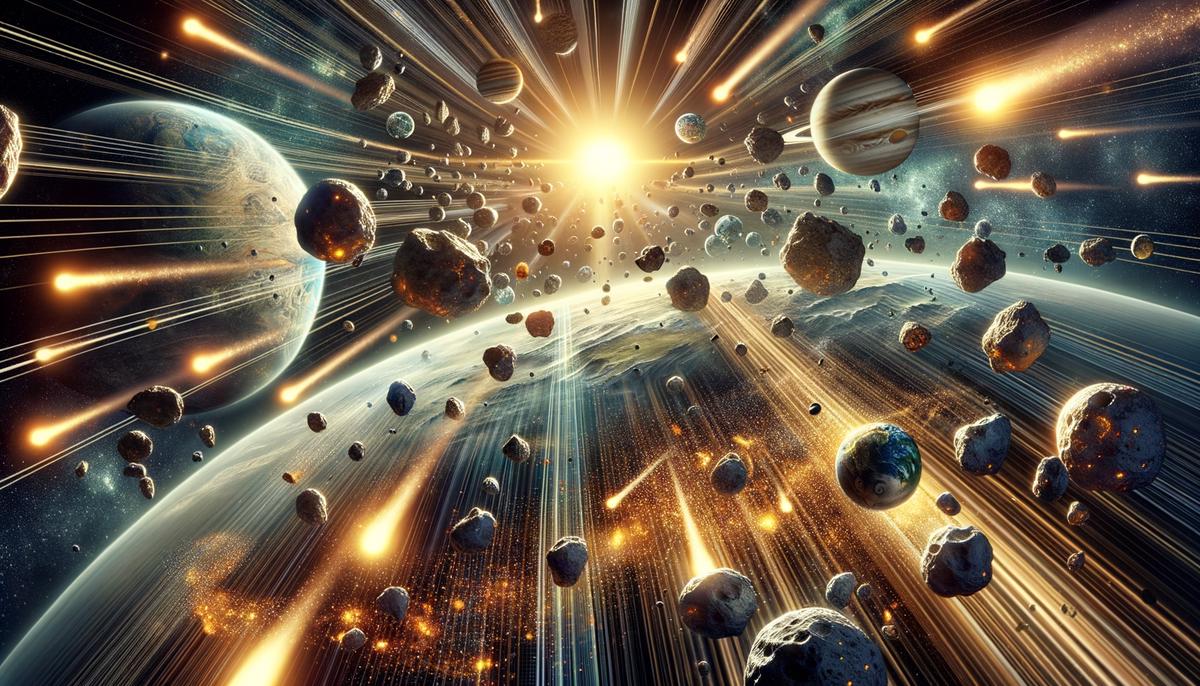
The origins of Earth's water involve a complex interplay of cosmic events. Asteroids and comets likely acted as couriers, delivering water to our once-dry planet. These icy visitors, influenced by the gravitational forces of gas giants like Jupiter, may have crashed into Earth, depositing liquid riches.
Deep within Earth's mantle, minerals contain hydrogen that might trace back to the solar nebula. This circumstellar disk of dust and gas, which nurtured our sun and its planetary siblings, left behind hydrogen now entwined in Earth's structure.
Isotopic signatures, particularly the ratio of deuterium to hydrogen, offer insights into planetary water origins. Mars, with its distinct deuterium concentrations, tells a drier story. Moons like Enceladus and Titan, harboring liquid beneath icy crusts, prompt further speculation about water's presence in our cosmic neighborhood.
This exploration extends to exoplanets, which may conceal subterranean oceans as dynamic as those beneath Earth's crust. The presence and formation of water are not limited to early asteroid and comet impacts, suggesting a shared cosmic inheritance among various celestial bodies.
Habitability and Exoplanetary Water
Water's significance as a hallmark of habitability guides the search for potential life-harboring worlds beyond our solar system. In our quest for habitable exoplanets, scientists focus on systems like TRAPPIST-1, where three planets (e, f, and g) reside within the habitable zone—the region where liquid water could exist on a planet's surface.
However, water alone is insufficient for habitability. An atmosphere with a favorable gas composition is crucial. Earth's atmosphere, with its blend of nitrogen, oxygen, and traces of carbon dioxide, creates an equilibrium allowing water to flow freely. When examining exoplanets, scientists use spectroscopy to analyze atmospheric compositions, searching for water vapor or biosignature gases like methane or oxygen.
Advanced tools like the James Webb Space Telescope (JWST) are set to revolutionize our understanding by probing exoplanetary atmospheres with unprecedented clarity. Researchers hope to detect carbon dioxide depletion, which could indicate the presence of water and possibly life.
While water is central to habitability, other factors play crucial roles:
- Atmospheric retention
- Magnetic shielding
- Geological activity
- Planetary dynamics
Earth's Moon stabilizes our climate, while Jupiter's gravity shields us from cosmic debris, illustrating the complex interplay within a life-supporting system.
The search for distant waters opens an optimistic era in space exploration. Each discovery brings us closer to understanding the potential for life beyond Earth, suggesting that the universe may harbor numerous worlds capable of supporting diverse ecosystems.
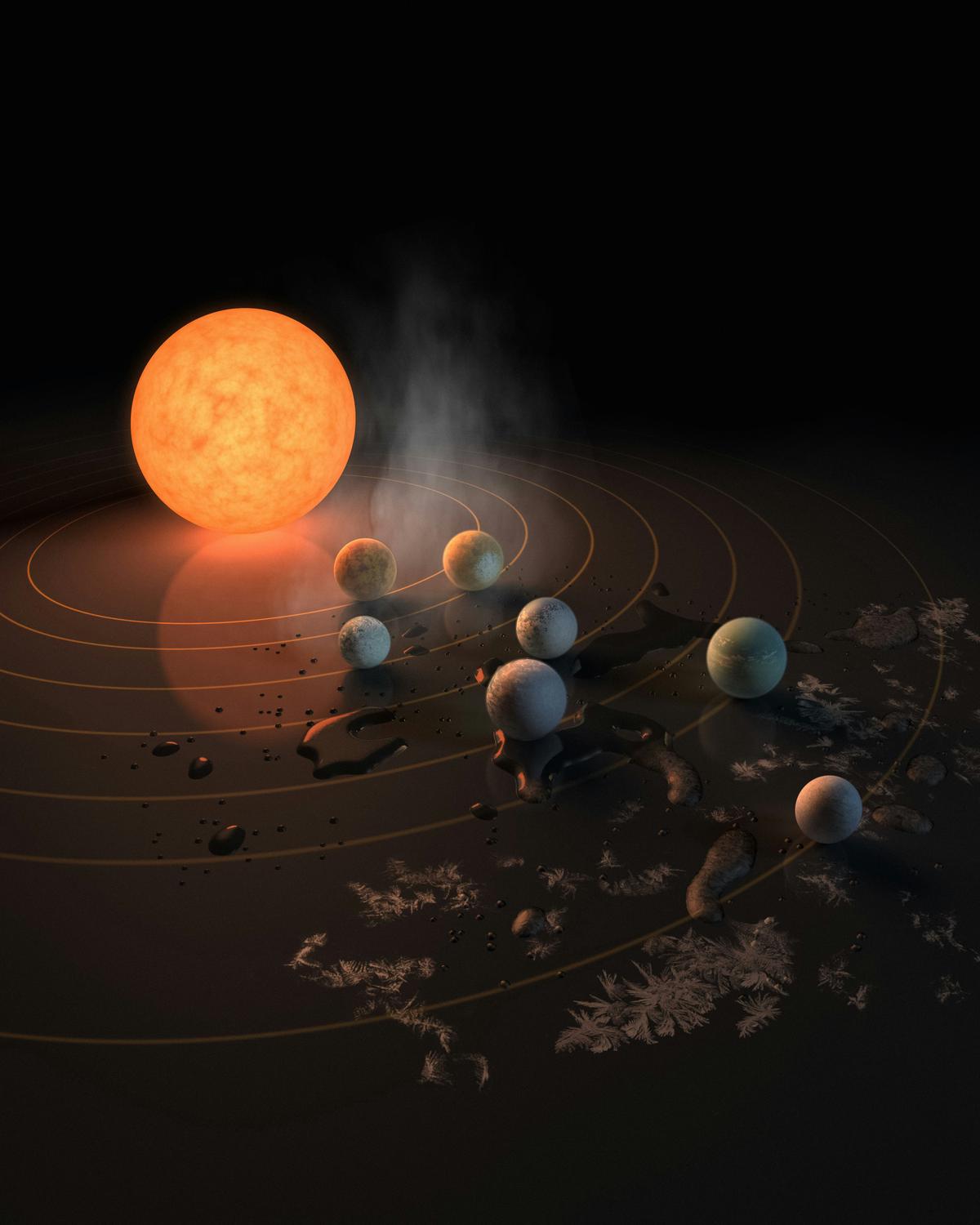
Photo by hubblespacetelescope on Unsplash
As we explore the universe, we find that water, in various forms and locations, might be more prevalent than previously thought. This widespread presence of water hints at the potential for life-supporting environments across distant worlds, expanding our understanding of the cosmos and its capacity to nurture life.
-
1. Meech K, Hallis L. The origin of Earth's water. Science. 2022;375(6582):eabc7575.
2. Sharp Z, Draper D. The chlorine abundance of Earth: Implications for a habitable planet. Earth Planet Sci Lett. 2013;369-370:71-77.
3. Stephant A, Hervig R, Wadhwa M. Hydrogen isotopic composition of water in nominally anhydrous minerals from eucrites: Implications for the origin and evolution of water on 4 Vesta. Geochim Cosmochim Acta. 2021;292:557-576.
4. Alexander C. The origin of inner Solar System water. Philos Trans A Math Phys Eng Sci. 2017;375(2094):20150384.
