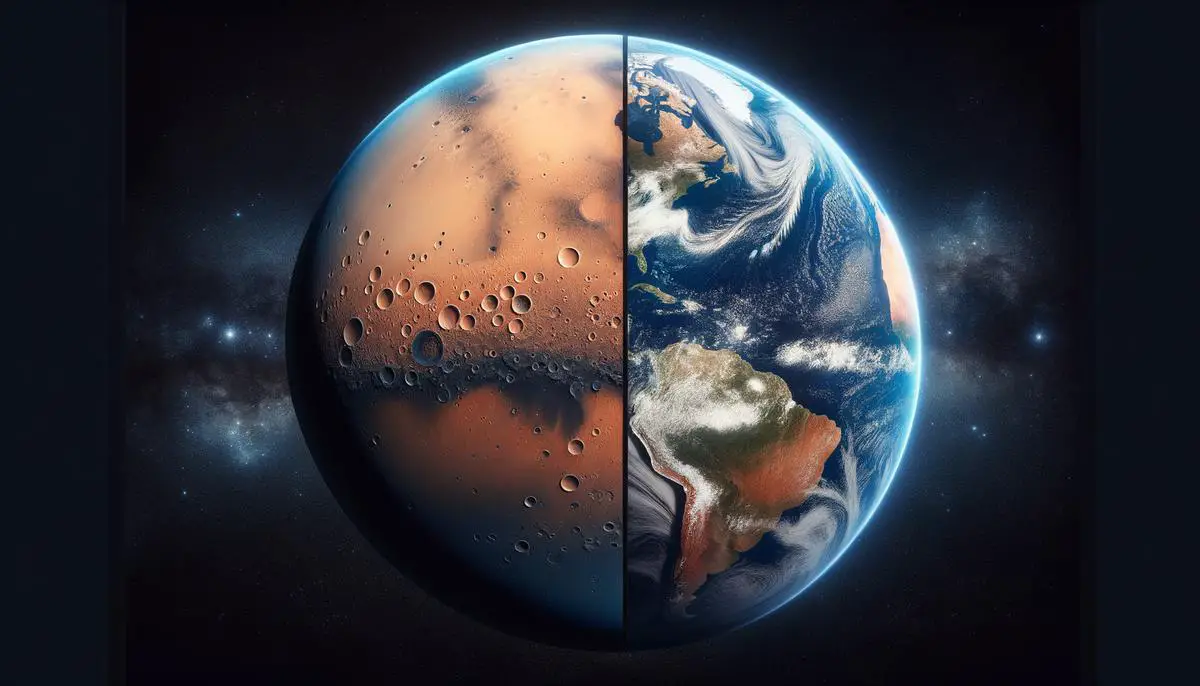
Mars' Climate and Atmospheric Conditions
Mars presents a stark contrast to Earth's hospitable environment. Its atmosphere is thin, offering about 1% of Earth's atmospheric pressure, and is composed mostly of carbon dioxide (95.3%). This leads to average surface temperatures of about minus 80 degrees Fahrenheit, significantly colder than Earth's global average of 59 degrees Fahrenheit.
Seasonal variations on Mars are pronounced due to its tilted axis and elliptical orbit. During summer, the polar ice caps recede, potentially allowing briny water to flow down slopes. However, the planet's ability to sustain life remains questionable.
Mars' lack of a strong magnetic field impacts its ability to retain atmosphere. The planet continually loses gases to space, affecting its climate stability. While CO2 greenhouse effects are observed in the polar ice caps, Mars lacks the density of greenhouse gases needed for a climate similar to Earth's.
Recent discoveries of carbonate minerals suggest that liquid water once flowed on Mars, indicating it may have been warm enough for life in the distant past. However, the current Martian climate presents extreme challenges, including planet-wide dust storms that can block sunlight for months, complicating attempts to maintain consistent temperatures necessary for life to thrive.
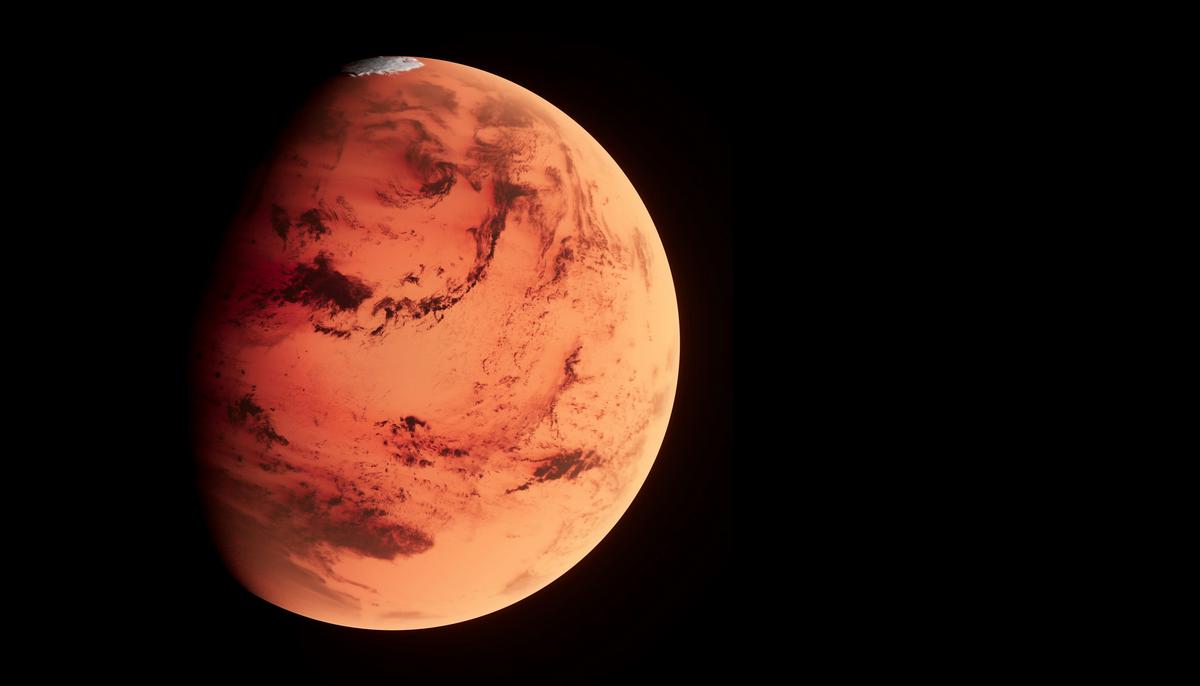
Photo by planetvolumes on Unsplash
Potential for Life on Mars
Despite Mars' harsh conditions, the possibility of microbial life cannot be entirely ruled out. NASA's rovers have provided compelling discoveries, such as ancient streambeds and organic compounds, hinting at life's potential.
The presence of carbonates indicates that Mars once had a thicker atmosphere capable of maintaining liquid water. These conditions could have provided temporary refuges where life could have emerged. The extended presence of Mars' magnetic dynamo may have provided protection from cosmic radiation for a longer period than initially believed, potentially allowing life to exist on the surface for an extended time.
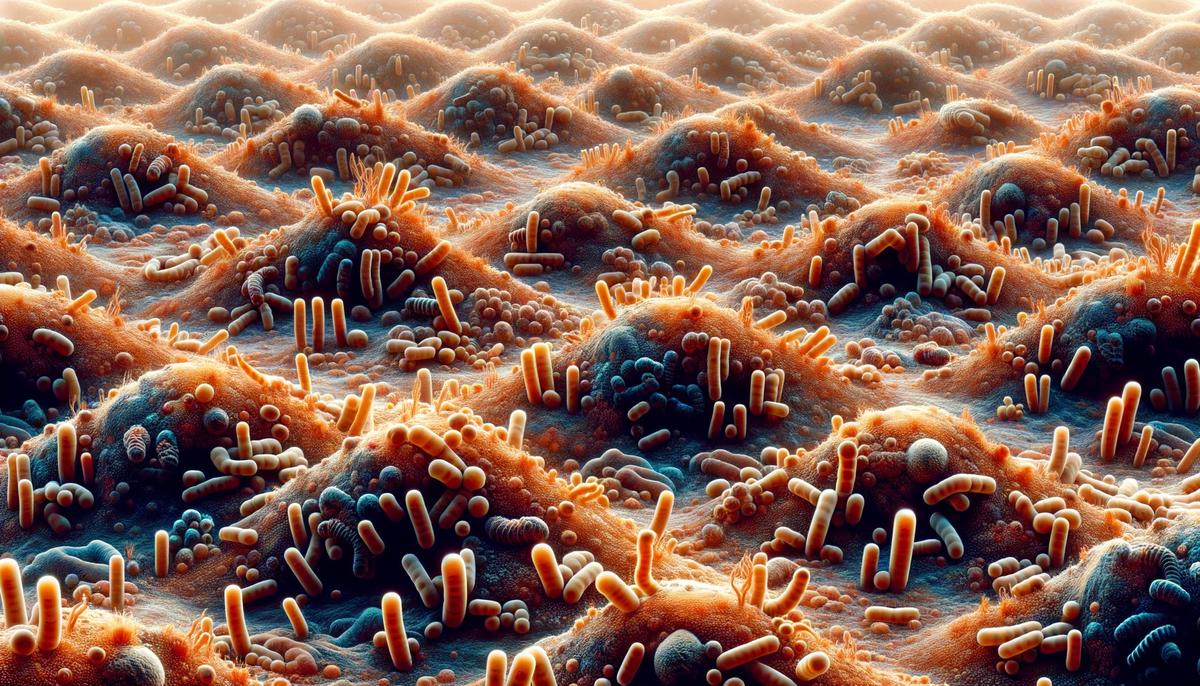
Attention is also turning to underground environments. Geothermal warmth might sustain ancient microbial havens beneath the surface, protected from radiation. Similar to Earth's extremophiles, Martian microbes could potentially exist in unexplored subterranean habitats.
Ongoing and future missions continue to investigate Mars' habitability, contributing to our understanding of life's endurance and adaptability in the universe. These efforts not only shed light on Mars' potential for life but also inform the broader search for life beyond Earth.
Terraforming and Regional Habitation Strategies
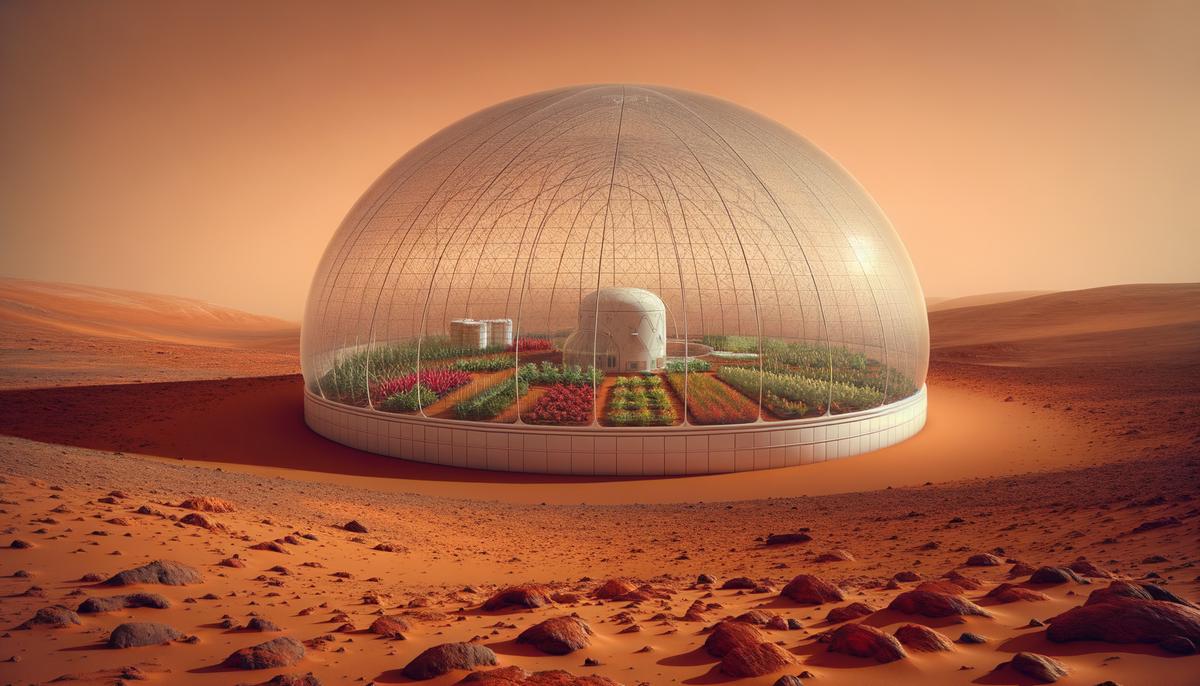
While global terraforming of Mars has been deemed unfeasible, focus has shifted to more practical regional habitation strategies. Silica aerogel, an exceptionally light and insulating material, offers promise in creating localized environments capable of supporting life on Mars.
A thin layer of silica aerogel can:
- Maintain temperatures above the melting point of water
- Shield against harmful ultraviolet radiation
- Allow photosynthesis-friendly sunlight to pass through
This could enable the creation of Martian greenhouses or habitation domes where life could be sustained.
These localized habitation initiatives present a more achievable approach than full-scale atmospheric alteration. However, they also raise ethical questions about potentially disrupting any existing Martian ecosystems, however primitive they may be.
As we contemplate introducing Earth life to Mars, it's crucial to balance scientific advancement with responsible stewardship. These considerations will shape our approach to integrating Mars into human civilization while preserving its unique characteristics and potential indigenous life forms.
Comparing Earth's and Mars' Habitability over Time
Earth and Mars offer contrasting narratives of planetary evolution. Billions of years ago, Mars likely had a wetter, warmer climate with rivers and lakes. It also possessed a protective magnetic field, similar to Earth's, which helped maintain a thicker atmosphere.
The loss of Mars' dynamo effect around 3.9 billion years ago marked a turning point. Without its magnetic shield, Mars gradually lost its atmosphere to solar wind, leading to a cooling climate and the freezing of surface water into polar ice caps and subterranean layers.
In contrast, Earth has maintained a relatively stable climate thanks to its:
- Dynamic carbon and water cycles
- Strong atmosphere
- Persistent magnetic field
Earth's geological activity, including plate tectonics, has contributed to its long-term habitability by regulating carbon dioxide levels and preventing extreme climate shifts.
Studying Mars' atmospheric escape and magnetic field loss provides valuable insights into Earth's potential vulnerabilities and informs our understanding of maintaining long-term planetary habitability. This comparative analysis not only enhances our knowledge of planetary evolution but also guides our approach to both preserving Earth's environment and potentially creating habitable conditions on Mars in the future.

As we continue to explore Mars, we gain invaluable insights into planetary evolution and the conditions necessary for sustaining life. This knowledge not only fuels our aspirations for potential future habitation on Mars but also deepens our appreciation for Earth's unique ability to support life. Our ongoing research serves as a crucial step in understanding our place in the universe and the delicate balance required for planetary habitability.
- Wordsworth R, Kerber L, Pierrehumbert R, et al. Enabling Martian habitability with silica aerogel via the solid-state greenhouse effect. Nat Astron. 2019;3:898-903.
- Tutolo BM, Bercovici D, Kite ES, et al. Evidence for a Martian carbon cycle. Nature. 2023;617:506-511.
- Dumusque X, Cretignier M, Sousa SG, et al. A super-Earth crossing the habitable zone of its star. Astron Astrophys. 2023;670:A74.
