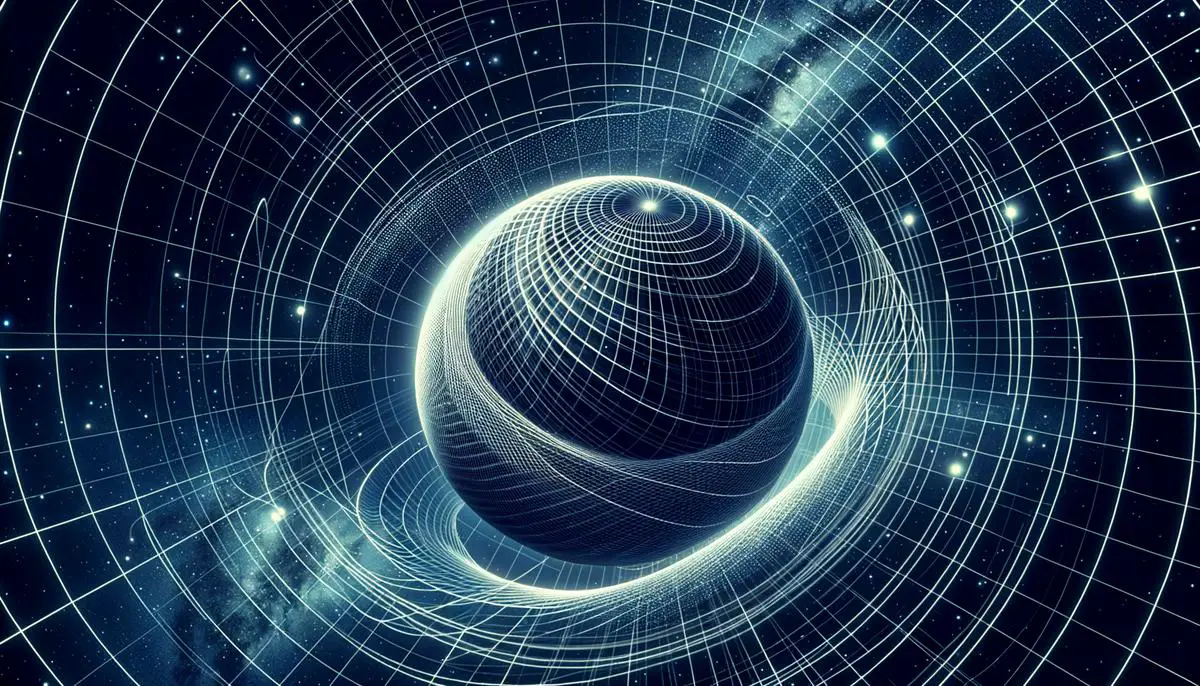
General Relativity and Space-Time
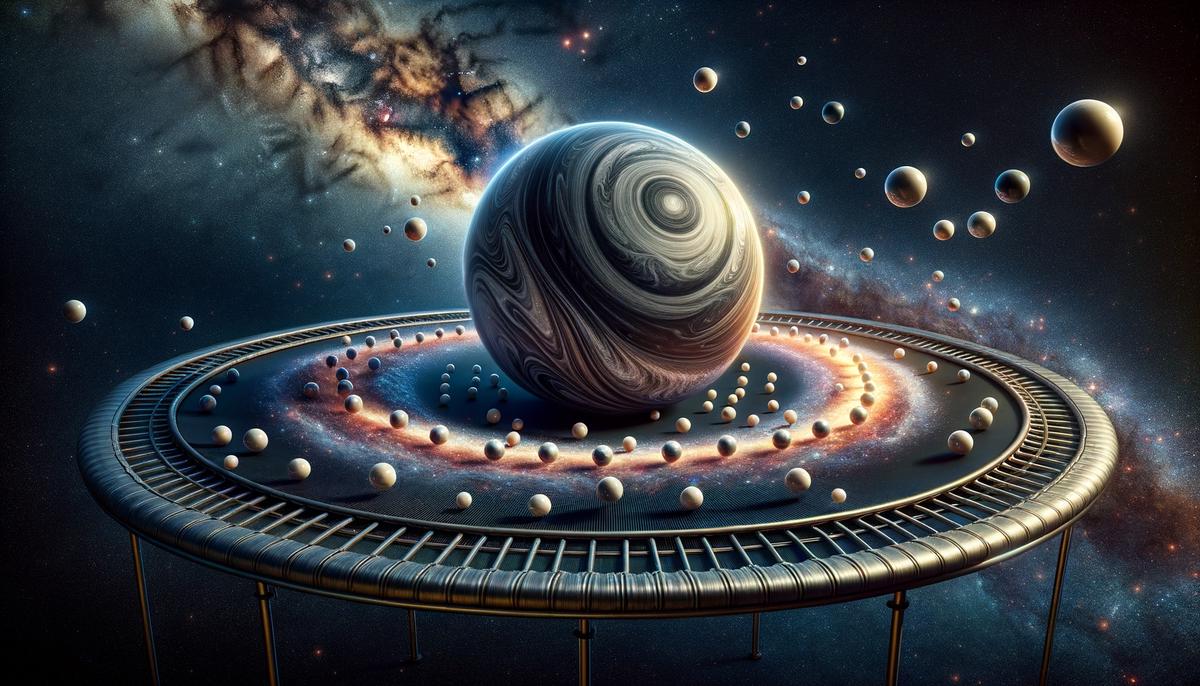
Albert Einstein's theory of general relativity, introduced over a century ago, suggests that gravity is not merely a force but a curvature in space-time. Picture a bowling ball placed on a trampoline — that's a massive object creating a warp in the fabric of space-time itself.
Einstein's theory explained Mercury's slightly off-kilter orbit around the sun, which had flummoxed Newton's predictions. The sun's massive presence causes the space-time around it to curve, gently nudging Mercury to follow an unexpected path.
Gravitational waves, ripples in space-time caused by massive cosmic events like colliding black holes, have been detected by LIGO, confirming another aspect of Einstein's theory. These waves stretch and squeeze the fabric of space-time as they traverse vast distances.
Gravitational lensing, a side effect of warped space-time, occurs when light is bent around massive entities like black holes. This bending creates illusions that allow astronomers to observe otherwise hidden regions of the universe.
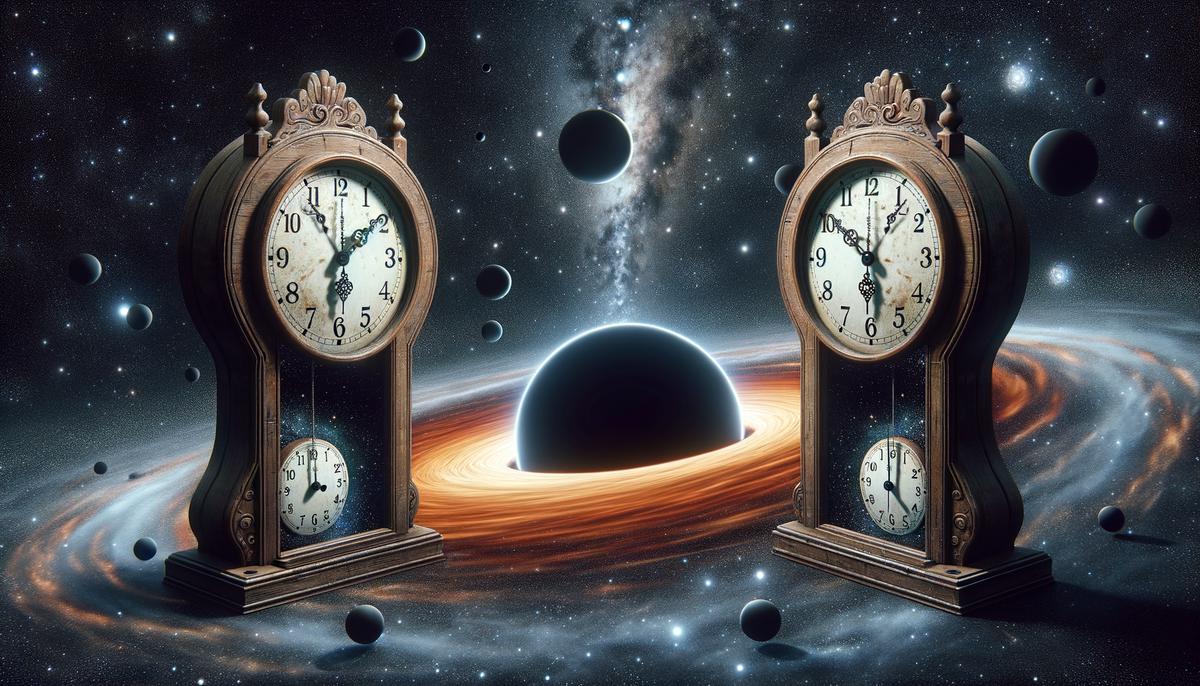
Time itself is affected by massive objects, ticking slower in their presence compared to empty stretches of space. This time distortion is another fascinating aspect of general relativity.
Despite its achievements, general relativity still struggles to reconcile with quantum theories. Physicists are working on theories like string theory and loop quantum gravity to bridge the gap between the cosmic and quantum worlds.
Gravitational Lensing
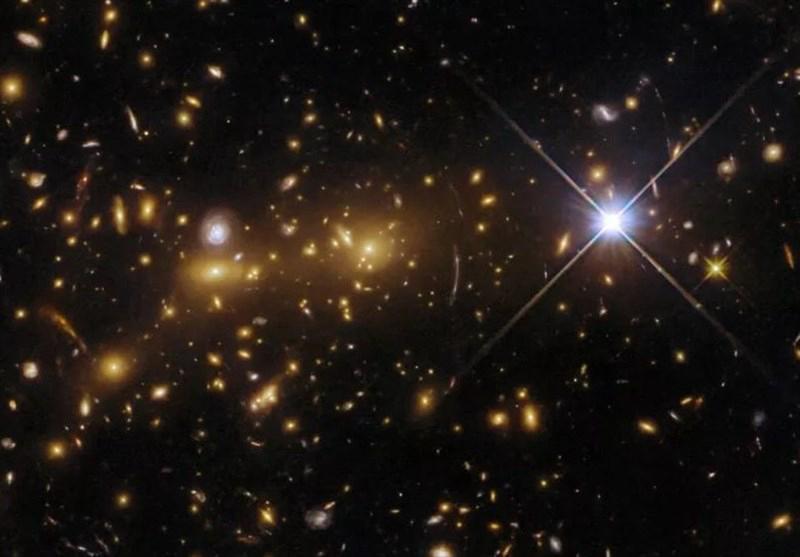
Gravitational lensing, a phenomenon predicted by general relativity, occurs when massive objects like galaxy clusters or black holes bend light around their immense gravitational fields. This bending turns these objects into cosmic magnifying glasses, amplifying and transforming the view of distant galaxies.
For astronomers, gravitational lensing serves as both a magnifying tool and a detective's lens. It allows observation of celestial objects that would otherwise remain hidden due to vast spatial distances. The famous quasar Einstein Cross exemplifies this phenomenon, presenting multiple images of a single celestial entity.
Beyond observation, gravitational lensing acts as a probe into the invisible fabric of dark matter. The gravitational influences exerted by dark matter bend light from distant sources in distinctive patterns, enabling scientists to map its distribution across the cosmos.
Gravitational lensing also serves as a critical test arena for general relativity. Each precisely verified light-bending display reinforces Einstein's theories, demonstrating the resilience of general relativity as a cornerstone of our cosmic understanding.
Gravitational Waves
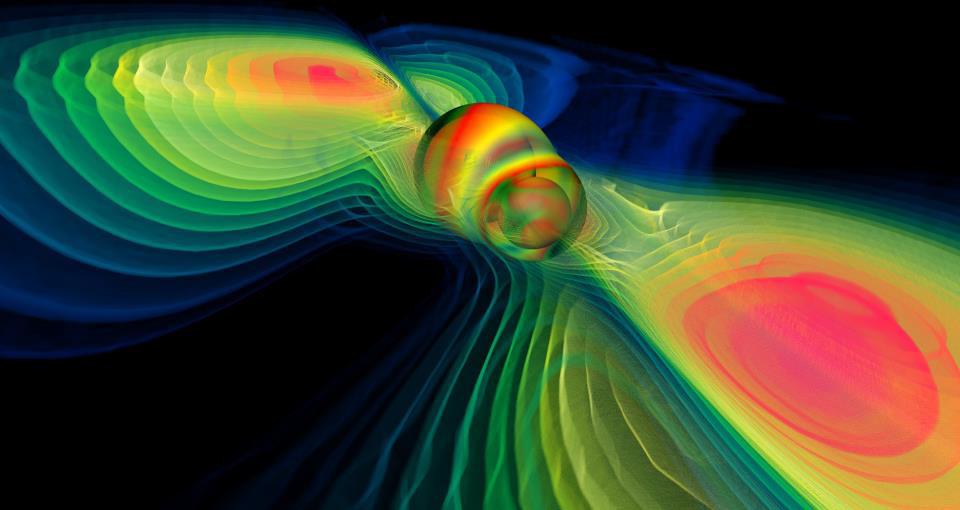
Gravitational waves are ripples in the fabric of space-time caused by cataclysmic cosmic events such as colliding black holes or neutron stars. Predicted by Einstein's theory of general relativity, these waves remained theoretical until their direct detection by the Laser Interferometer Gravitational-Wave Observatory (LIGO) in 2015.
The origins of gravitational waves lie in dramatic cosmic events. When two black holes or neutron stars merge, they release an astronomical amount of energy, sending out waves that ripple through the cosmos. These waves are powerful enough to distort miles-long instruments on Earth by mere fractions of a proton's diameter.
Gravitational waves have expanded our understanding of the universe by offering new ways to observe celestial happenings that traditional telescopes cannot detect. They traverse the universe largely unaltered by matter, bringing untainted information from the far reaches of space.
The detection of gravitational waves has opened a new era in astrophysics. It allows us to "listen" to the universe, decoding secrets woven across galaxies by the most explosive events. Each detected ripple adds another piece to our understanding of the cosmic symphony.
Time Distortion and Redshift
Time distortion, a key concept in general relativity, reveals that time flows differently near massive bodies such as planets, stars, or black holes. The stronger the gravitational pull, the slower the passage of time — a phenomenon known as gravitational time dilation.
Redshift is a tool that allows us to observe this time distortion. When light leaves a massive object, it stretches to longer, redder wavelengths as it escapes the gravity's grip. This effect serves as a spectral trail that hints at the underlying textures of the space-time fabric.
By measuring redshift, astrophysicists can quantify the gravity-induced slowing of time. This allows them to peer into the universe not only through space but also through time itself, testing the predictions of general relativity across celestial locales.
The interplay of time distortion and redshift illuminates our understanding of the universe, painting a picture where massive celestial bodies influence the flow of time. It reinforces the concept that space and time are interwoven, as Einstein's theory suggests.
Quantum Gravity and Space-Time
The quest for a unified theory that harmonizes Quantum Mechanics and General Relativity has led to some of the most imaginative concepts in modern physics. This theoretical framework, called Quantum Gravity, aims to describe the behavior of gravity at the smallest scales of the universe.
String theory, a prominent approach to quantum gravity, proposes that the basic constituents of the universe are tiny vibrating strings in an 11-dimensional space. These strings vibrate at specific frequencies to create the diversity of particles we observe. While mathematically elegant, string theory currently lacks empirical confirmation.
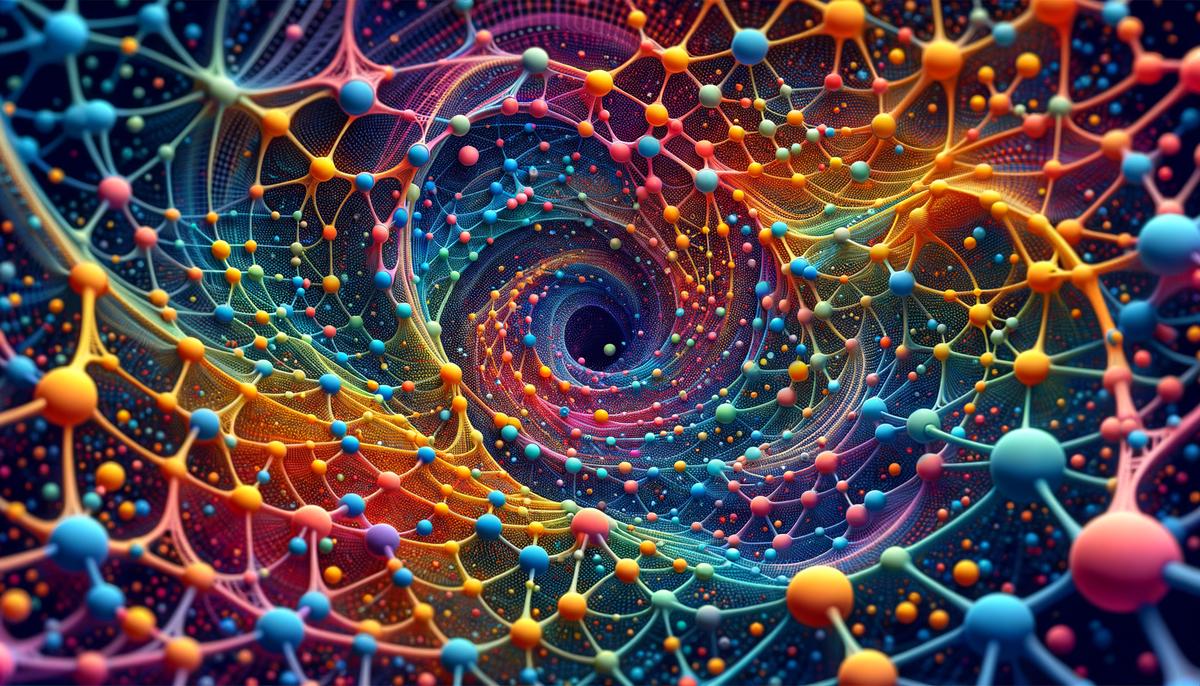
Loop Quantum Gravity (LQG) offers an alternative perspective, suggesting that space-time is not a smooth continuum but a woven fabric of interconnected loops. LQG attempts to quantize every thread of space-time, positing that at the tiniest scales, the universe's smooth stage turns into a granular arena.
Mastering these unifying theories could reveal insights into the universe's inception, the nature of black holes, and potentially even manipulate the structure of space-time itself. However, significant challenges remain in bridging the conceptual gaps between quantum mechanics and general relativity.
As physicists continue to explore these theories, we stand at the precipice of discovery. The triumph of quantum gravity could illuminate the universe's most hidden truths, promising a future where these enigmatic pathways are not just observed, but truly understood.
As we continue to explore the intricacies of the universe, general relativity remains a cornerstone of our cosmic comprehension. It invites us to ponder the mysteries that lie beyond, encouraging a deeper connection with the cosmos and its hidden workings.
- Einstein A. Die Grundlage der allgemeinen Relativitätstheorie. Annalen der Physik. 1916;354(7):769-822.
- Abbott BP, Abbott R, Abbott TD, et al. Observation of Gravitational Waves from a Binary Black Hole Merger. Phys Rev Lett. 2016;116(6):061102.
- Pound RV, Rebka GA. Apparent Weight of Photons. Phys Rev Lett. 1960;4(7):337-341.
- Stairs IH, Freire PCC, Kramer M, et al. Testing General Relativity with Pulsar Timing: The Double Pulsar System PSR J0737-3039. Phys Rev X. 2021;11(4):041050.
