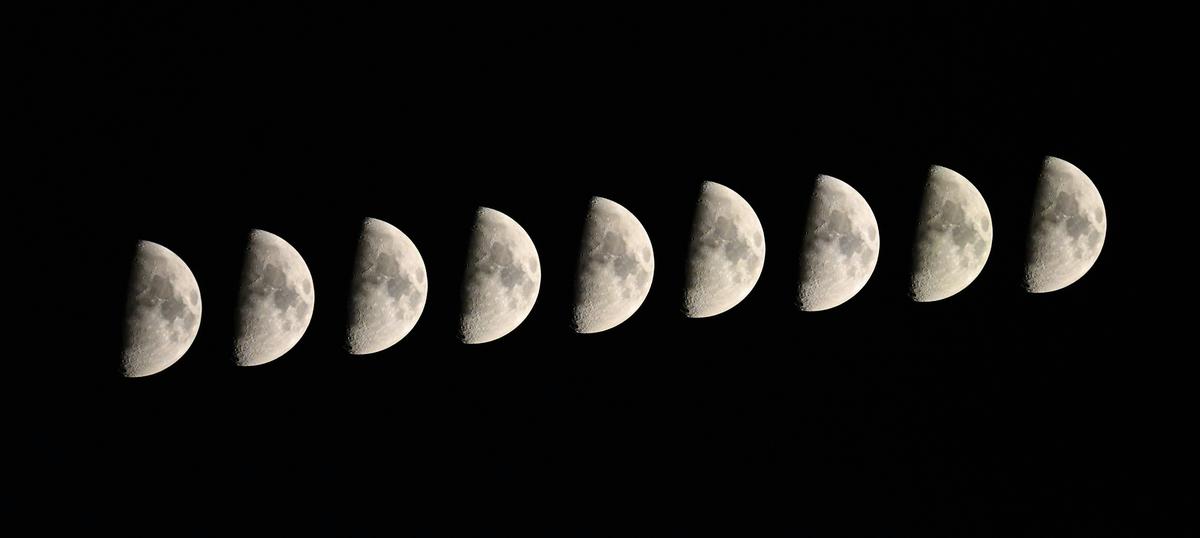
Understanding Moon Phases
The moon transforms about every 29.5 days, going through eight distinct phases. Starting with the new moon, it progresses to the waxing crescent, eventually becoming a full moon before waning back to new.
Moon phases influence Earth's tides. During full and new moons, the sun and moon align their gravitational forces, creating more pronounced spring tides.
Lunar phases also affect visibility. A full moon illuminates night landscapes, while a waning crescent offers little light.
Many cultures have developed stories and names for different moon phases, often tied to natural cycles or important events. These names, like the Wolf Moon or Harvest Moon, reflect our ancestors' connection to lunar rhythms.
Each phase presents a unique appearance:
- Quarter phases show half the moon's face lit
- Gibbous phases reveal most of the lunar surface
The moon's cycle influences not only our planet's waters but also our cultural imagination, weaving together natural phenomena and human storytelling.
Astrological Impact of Moon Phases
In astrology, moon phases are believed to influence emotions, choices, and relationships. Each phase carries its own energy and significance.
The new moon symbolizes beginnings and intention-setting. It's a time for introspection and planning, especially resonant for signs like Aries that align with new starts.
As the moon waxes, it encourages action and growth:
- Waxing crescent phase nurtures intuition and creativity
- First quarter moon calls for decisiveness and overcoming challenges
The full moon illuminates truths and heightens emotions. It's a time of culmination and revelation, particularly impactful for empathetic signs like Pisces and Scorpio.
Waning phases prompt reflection and release:
- Waning gibbous phase invites gratitude and sharing of knowledge
- Last quarter facilitates letting go of what no longer serves us
The cycle concludes with the waning crescent, a time for rest and preparation before the new moon begins anew.
These lunar energies offer a framework for understanding our emotional rhythms and navigating life's ebbs and flows with greater awareness and purpose.

Full Moon Names and Traditions
Full moon names reflect the wisdom of our ancestors and their deep connection to nature's cycles. These names, rooted in various cultural traditions, offer insight into seasonal changes and human activities throughout the year.
January's Wolf Moon, named for the howling of wolves in winter, speaks to the challenges of survival during cold months. It reminds us of our resilience and the interconnectedness of all life.
The August Sturgeon Moon, named by fishing tribes for the abundance of this fish, celebrates nature's bounty. It marks a time of harvest and preparation for the coming cooler seasons.
September's Harvest Moon holds special significance in agrarian societies. Its warm light extends the workday, allowing farmers crucial extra time to bring in crops. This moon embodies gratitude for nature's gifts and the importance of timing in agriculture.
Other moons mark seasonal shifts:
- March's Worm Moon signals spring's arrival as earthworms emerge
- April's Pink Moon celebrates early blooming flowers like phlox
These lunar names serve as a poetic calendar, connecting us to natural rhythms and reminding us of our place within the greater cosmos. They invite us to pause and reflect on the cycles that shape our world and our lives.

The moon's phases offer more than celestial beauty. They remind us of life's interconnectedness and natural rhythms. As we observe the moon's journey, we're invited to reflect on our own cycles of growth and renewal, finding wisdom in each transition.
- NASA. Moon Phases. National Aeronautics and Space Administration.
- The Old Farmer's Almanac. Full Moon Names and Their Meanings. Yankee Publishing Inc.
- Astronomical Society of the Pacific. Lunar Phases and Eclipses. ASP Conference Series.
