General Relativity and Space-Time
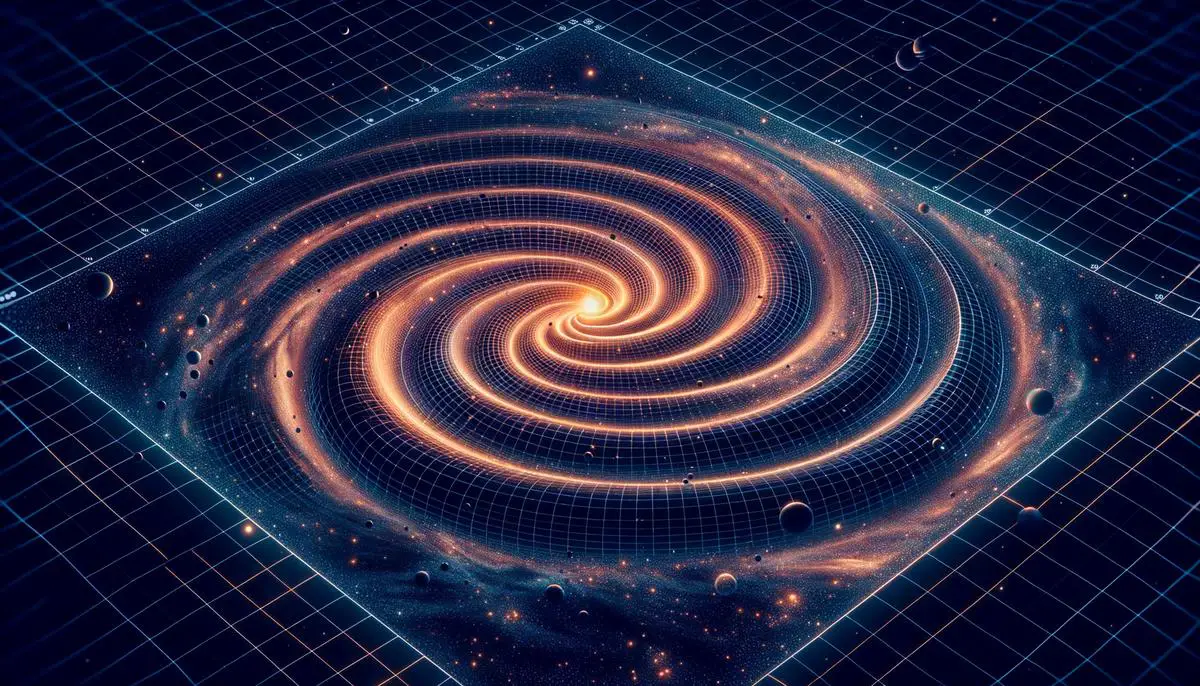
Einstein's theory of general relativity reveals gravity as the curvature of space-time. Massive objects like galaxies warp space-time, creating gravity wells that guide the paths of light and celestial bodies. This four-dimensional continuum of space and time explains how gravity influences the movement of objects through curved paths rather than straight lines.
Galaxies play a significant role in this cosmic interplay. Their immense gravity creates deep distortions in space-time, leading to phenomena like gravitational lensing. This effect bends light from distant objects, causing them to appear distorted or magnified. Scientists utilize this natural cosmic lens to study far-off galaxies and peer into the universe's distant past.
General relativity reshapes our understanding of movement through warped space. Objects follow paths of least energy, which are usually curved in this distorted space-time. This principle governs planetary orbits and defines the boundaries of cosmic motion.
The consistent verification of general relativity's predictions continues to astound physicists, cementing its place as a cornerstone of our understanding of the universe's structure and behavior.
Gravitational Lensing
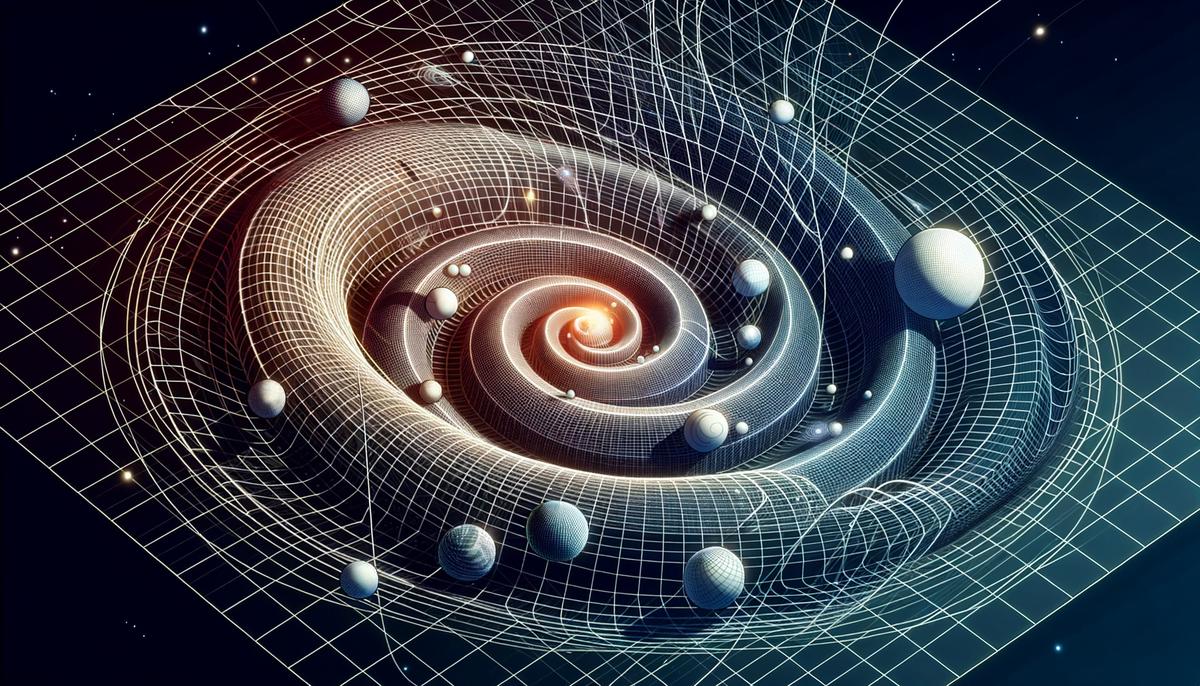
Gravitational lensing, a key prediction of general relativity, demonstrates how massive cosmic objects can bend light, revealing hidden aspects of the universe. When light from distant sources encounters intervening galaxies or galaxy clusters, it bends around these massive bodies, creating magnified, distorted, or multiple images of the background object.
This phenomenon serves as a powerful tool for astronomers. It allows them to:
- Study extremely distant galaxies that would otherwise be too faint to observe
- Effectively provide a natural telescope to peer deeper into the cosmos
- Map the distribution of dark matter, which doesn't interact with light but contributes to the lensing effect through its gravitational influence
By analyzing these lensed images, scientists gain insights into the nature of space-time, the distribution of mass in the universe, and the evolution of galaxies over cosmic time. Each lensing event offers a unique opportunity to expand our understanding of the universe's structure and composition.
Dark Matter and Galaxy Formation
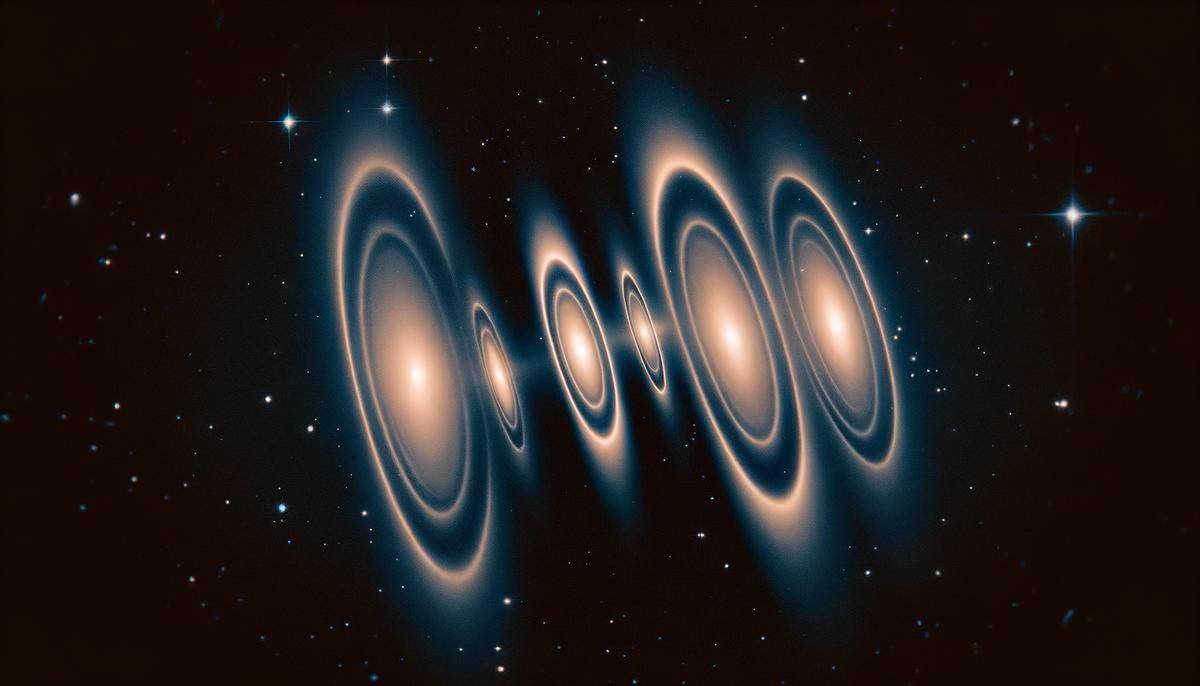
Dark matter, though invisible to direct observation, plays a crucial role in galaxy formation and structure. It forms vast halos that provide the gravitational scaffolding around which visible matter coalesces to form galaxies. These dark matter halos act as cosmic architects, guiding the distribution of gas and stars within galaxies and influencing their overall shape and dynamics.
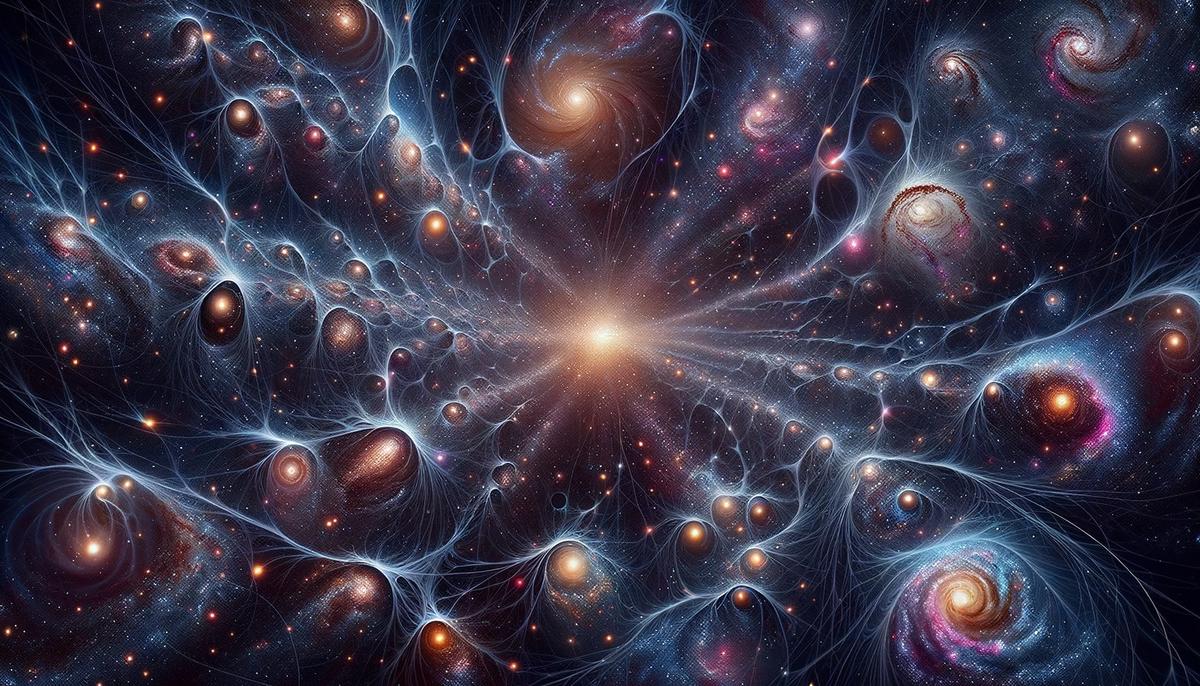
The presence of dark matter is inferred through its gravitational effects on visible matter. It acts as a binding force, holding galaxies together despite their rapid rotations and preventing them from flying apart. Dark matter also forms the backbone of the cosmic web, a vast network of filaments that connects galaxies and galaxy clusters across the universe.
Studying dark matter's influence on galaxy formation and evolution is a key area of astrophysical research. By mapping the distribution of dark matter through gravitational lensing and galactic motion, scientists continue to refine our understanding of this mysterious substance and its role in shaping the cosmos.
Dark Energy and Cosmic Expansion
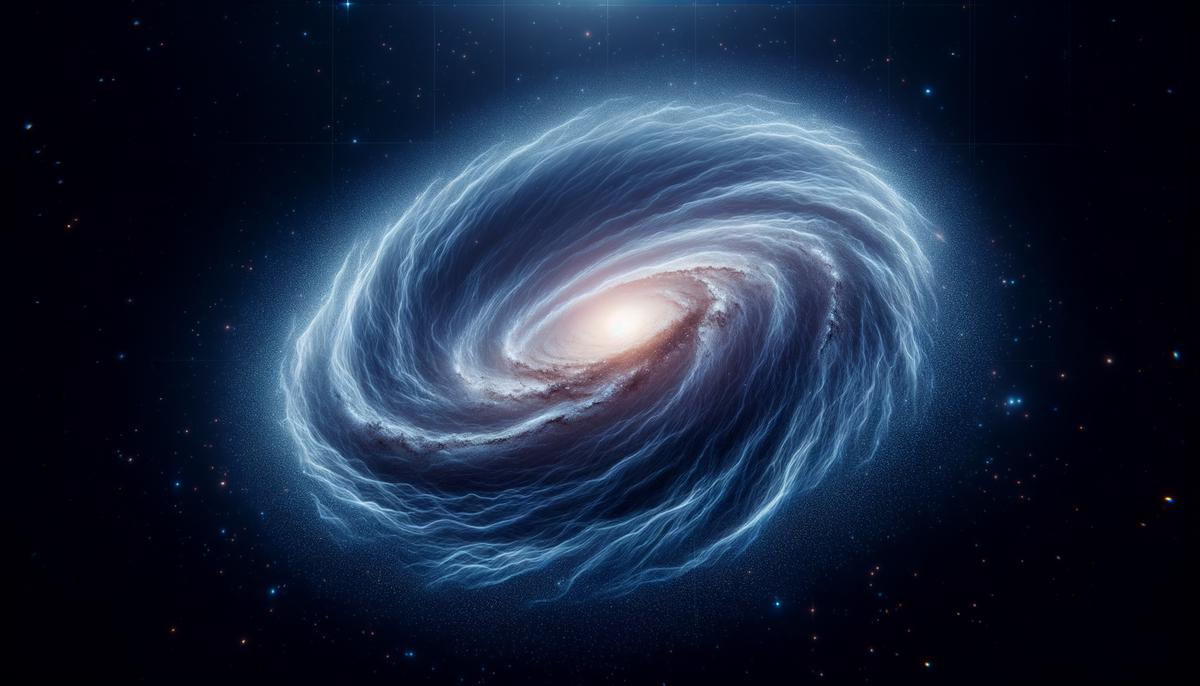
Dark energy, a mysterious force permeating the universe, drives the accelerated expansion of the cosmos. Unlike gravity, which pulls matter together, dark energy pushes the universe apart, causing galaxies to recede from each other at an increasing rate.
Key facts about dark energy:
- Comprises approximately 68% of the universe's total energy content
- Remains one of the biggest enigmas in modern cosmology
- Often described as a property of space itself, possibly related to quantum vacuum fluctuations
- Observed effects differ significantly from theoretical predictions
Dark energy's influence becomes dominant at intergalactic scales, where it overcomes the attractive force of gravity. This cosmic tug-of-war between dark energy and gravity shapes the large-scale structure of the universe and will likely determine its ultimate fate.
The study of dark energy pushes the boundaries of physics, challenging our comprehension of the universe's fundamental nature and evolution. As research progresses, scientists hope to uncover the secrets of this elusive force and its role in cosmic history.
Galactic Dynamics and Star Formation
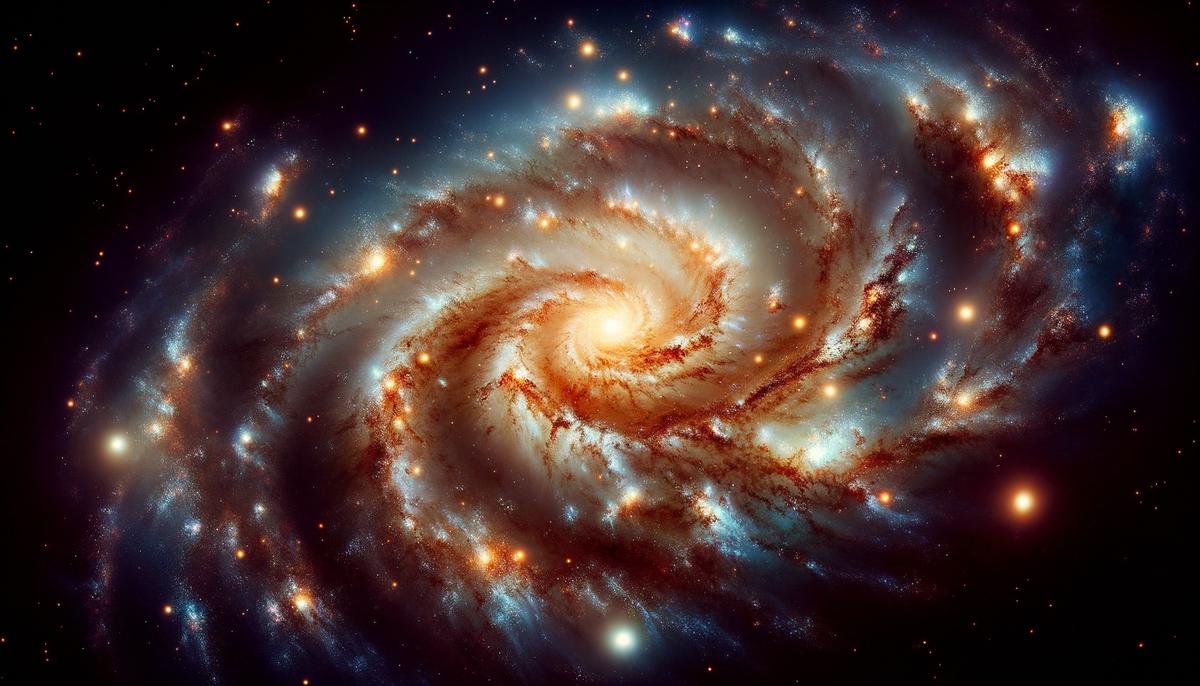
The internal dynamics of galaxies play a crucial role in star formation and galactic evolution. Spiral arms and barred structures in galaxies serve as conduits for gas and dust, guiding these materials towards regions where new stars can form.
In spiral galaxies, the arms act as density waves, compressing gas as it flows through them. This compression creates an environment conducive to star formation, with dense gas clouds collapsing under their own gravity to ignite nuclear fusion and birth new stars.
Bars in galaxies further influence this process by channeling gas towards the galactic center. This inward flow of material can trigger intense periods of star formation, known as starbursts, particularly in the central regions of galaxies.
These processes of gas flow and star formation are integral to galactic evolution. They not only add new stars to the galactic population but also enrich the interstellar medium with heavy elements, setting the stage for future generations of stars and potentially habitable planetary systems.
The study of galactic dynamics and star formation continues to provide insights into the life cycles of galaxies and the conditions necessary for the emergence of complex cosmic structures, including those that might harbor life.
As we continue to explore the universe, our understanding of cosmic phenomena deepens, revealing the intricate interplay of forces that shape our reality. From the warping of space-time to the mysterious influences of dark matter and dark energy, each discovery brings us closer to comprehending the grand design of the cosmos. This ongoing quest for knowledge not only expands our scientific understanding but also inspires us to contemplate our place in the vast tapestry of the universe.
- Einstein A. The Foundation of the General Theory of Relativity. Annalen der Physik. 1916;49:769-822.
- Hubble E. A Relation between Distance and Radial Velocity among Extra-Galactic Nebulae. Proceedings of the National Academy of Sciences. 1929;15(3):168-173.
- Perlmutter S, et al. Measurements of Ω and Λ from 42 High-Redshift Supernovae. The Astrophysical Journal. 1999;517(2):565-586.
- Rubin V, Ford W. Rotation of the Andromeda Nebula from a Spectroscopic Survey of Emission Regions. The Astrophysical Journal. 1970;159:379.
- Zwicky F. Die Rotverschiebung von extragalaktischen Nebeln. Helvetica Physica Acta. 1933;6:110-127.
